£3.8B seized bitcoin: UK judge rules Chinese law governs victims' claims
In brief
- Mr Justice Mark Turner ruled Chinese law, not English law, governs the victims' property claims.
- Metropolitan Police seized the 61,000 BTC from convicted fraudster Zhimin Qian.
- CoinDesk reported that the ruling doesn't finally decide who keeps the bitcoin.
- Victims' lawyers are appealing, the Financial Times reported; the CPS says another hearing will follow.
What the judge decided
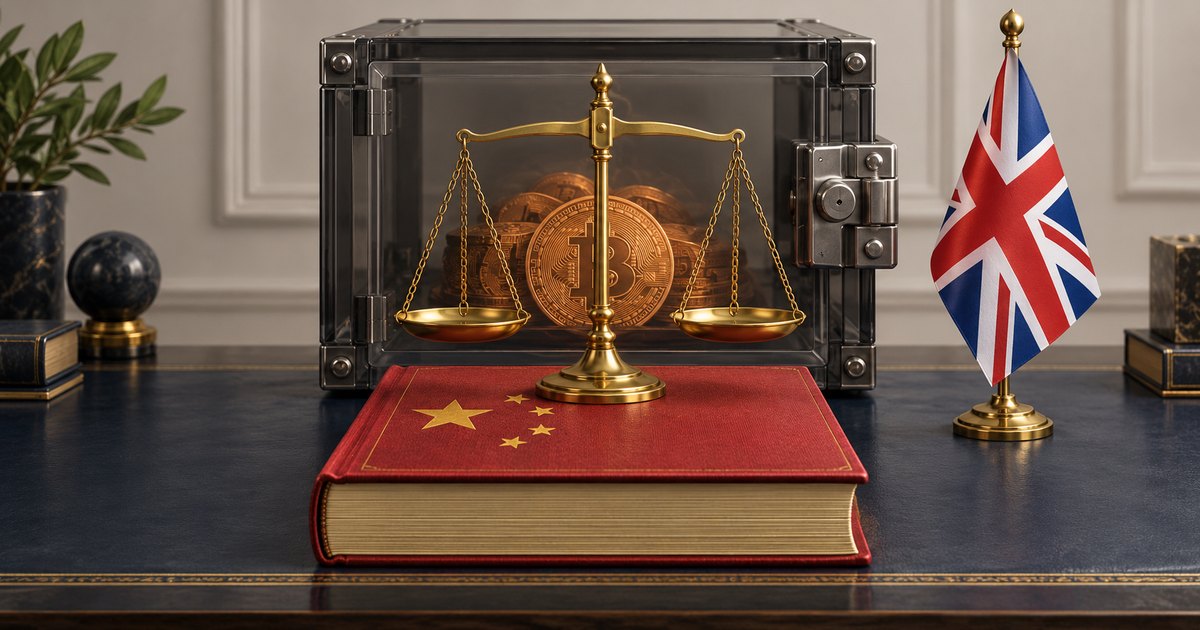
Mr Justice Mark Turner sided with U.K. authorities, ruling that Chinese law (not English law) must govern the victims' property claims because the fraud took place entirely in China, according to CoinDesk's report on the judgment. The victims had argued that English law should apply. It could have let them claim property rights over the crypto holdings.
That argument didn't hold.
“The contractual relationships thereby induced were entered into in China. The immediate economic consequences of the alleged wrongdoing were likewise suffered in China.”
The Zhimin Qian case
The coins were seized during the Met's investigation into Zhimin Qian, who pleaded guilty to defrauding thousands of people in China. Qian ran a Ponzi scheme through her company, Tianjin Lantian Gerui Electronic Technology, and defrauded over 128,000 investors between 2014 and 2017, according to CoinDesk. She converted the stolen funds into bitcoin and fled to the U.K. in 2017.
It isn't over yet
The ruling doesn't finally decide who keeps the bitcoin. CoinDesk's assessment is that it narrows the victims' route to recovery and improves the chances of the U.K. Treasury eventually retaining the coins. The Crown Prosecution Service said a further hearing will determine whether any victims can establish an interest in the bitcoin, as reported by CoinDesk. The victims' lawyers are appealing, according to the Financial Times (as cited by CoinDesk).
Governments holding seized crypto isn't new. The U.S. established a strategic bitcoin reserve in March 2025, and it includes BTC and other coins seized in enforcement actions; CoinDesk reported that no token in that reserve was acquired with taxpayer money. Addresses linked to the U.S. government hold $25.8 billion worth of cryptocurrencies, according to Arkham Intelligence.
If the U.K. ends up keeping most of the 61,000 BTC, it'll be one more government balance sheet built on seized coins rather than purchases. For now, that depends on the appeal and the CPS hearing.
Frequently asked questions
Why did the UK court say English law doesn't apply to the victims' claims?
According to CoinDesk, Mr Justice Mark Turner ruled that Chinese law must govern the victims' property claims because the fraud took place entirely in China. The victims had argued English law should apply because it could have let them claim property rights over the bitcoin.
Does the ruling mean the UK government keeps the seized bitcoin?
Not yet. CoinDesk reported that the ruling doesn't finally decide who keeps the bitcoin, though it narrows the victims' route to recovery. The Crown Prosecution Service said a further hearing will determine whether any victims can establish an interest, and the victims' lawyers are appealing, according to the Financial Times.
Where did the 61,000 seized bitcoin come from?
The coins were seized by London's Metropolitan Police in its investigation into Zhimin Qian. Qian ran a Ponzi scheme through Tianjin Lantian Gerui Electronic Technology, defrauding over 128,000 investors between 2014 and 2017, then converted the funds into bitcoin and fled to the U.K. in 2017.