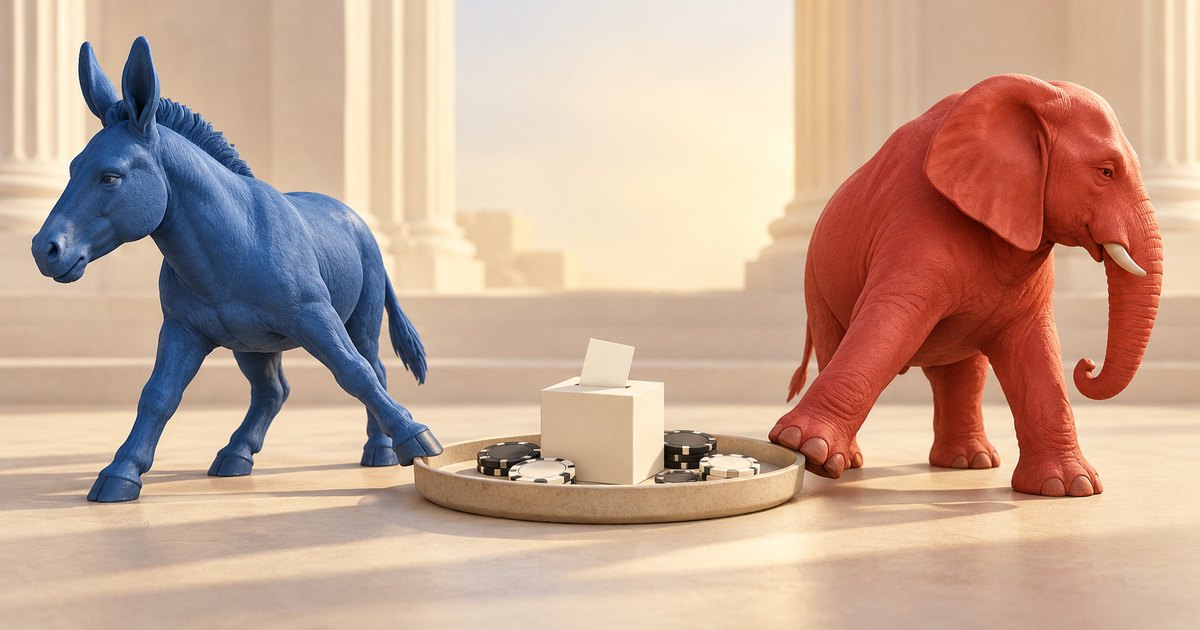
Apple bars staff from using confidential information on prediction markets

In brief
- Apple's revised insider trading policy explicitly bans prediction market trading on confidential information.
- Apple's fiscal 2026 Form 10-K, filed November 3, 2026, contained the change, per Crypto Briefing.
- The policy covers about 167,000 employees and independent contractors.
- Violators could be fired and required to repay equity awards, the report said.
What the filing says
Crypto Briefing's account of the 10-K says the revised insider trading policy adds a specific ban on using "Apple Confidential Information" to participate in prediction markets or event contracts. It covers about 167,000 employees and independent contractors who work with Apple. That's a lot of people.
Leaving the company doesn't end it (former employees stay bound by the restriction until the information in question becomes public). The ban also reaches nonpublic information about Apple's partners, such as suppliers and customers, and it bars staff from passing that information to others who might trade on it. Violators could be fired and required to repay equity awards, the report said.
The scope is what stands out.
Apple stated the policy applies whether or not the activity qualifies as insider trading or securities trading under the law, per Crypto Briefing. The company's previous policy already restricted trading in company securities while an employee held material nonpublic information. The new language goes further by naming prediction markets and event contracts outright.
The Apple-linked markets
Crypto Briefing pointed to recent prediction markets tied to Apple, including contracts on how many times the word "iPhone" would be said during an earnings call. Others centered on forecasts for product pricing. Some of those markets drew significant trading volume, the outlet reported, though it didn't give figures.
A gap in the rules?
Crypto Briefing framed the move as a sign of a regulatory gap. In its analysis, Apple felt it needed a rule that works whether or not existing law treats these bets as securities trading, which the outlet said suggests the legal framework hasn't kept pace with prediction market products. That's Crypto Briefing's read. It isn't a finding from the filing itself.
Frequently asked questions
What does Apple's new prediction market rule prohibit?
According to Crypto Briefing, Apple's revised insider trading policy bans using "Apple Confidential Information" to participate in prediction markets or event contracts. It also covers nonpublic information about partners such as suppliers and customers, and bars staff from passing such information to others who might trade on it.
Who is covered by Apple's prediction market ban?
The policy covers about 167,000 employees and independent contractors who work with Apple, Crypto Briefing reported. Former employees stay bound by the restriction until the information in question becomes public.
What happens to Apple employees who break the policy?
Violators could be fired and could be required to repay equity awards, according to Crypto Briefing's account of the filing. Apple stated the policy applies whether or not the activity qualifies as insider trading or securities trading under the law.