Baidu unveils Apollo World, an agent-driven world model for physical AI
In brief
- Apollo World debuted at Baidu's AI Day in Shenzhen on November 3, 2026.
- Baidu says Apollo World is already integrated into Apollo Go, its robotaxi service.
- Apollo World draws on data from more than 350 million kilometers of Apollo Go road testing.
- Vehicles and pedestrians in the simulation act as independent decision-making agents.
- Baidu also proposed a '2+3' evaluation standard for world models.
Built on Apollo Go's road data
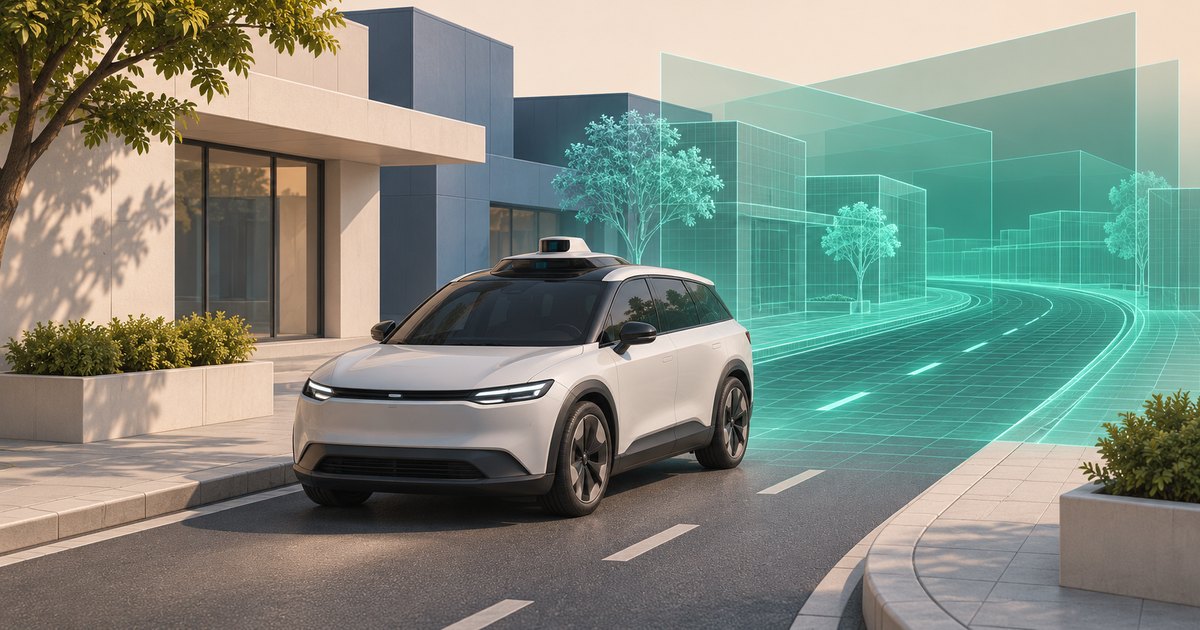
Apollo World debuted during the Apollo session of Baidu AI Day. Apollo is Baidu's autonomous driving brand, and it's also the name on Apollo Go, the robotaxi service the company says has been tested globally.
The engine behind the model draws on data from more than 350 million kilometers of real-world testing by Apollo Go, according to Baidu as reported by Crypto Briefing. That's the raw material. Inside Apollo Go, Baidu says the system handles verification and simulation across what it frames as infinite virtual scenarios (a claim the company hasn't quantified beyond that framing).
The more interesting part is how the simulation itself is built.
Every car and pedestrian is an agent
Vehicles and pedestrians in Apollo World aren't scripted background props. They're treated as agents, so each one makes its own decisions and reacts to the others around it. Crypto Briefing, citing a research summary, said the setup is designed to support intelligent decision-making and interaction among traffic participants.
Why does that matter? The launch fits a broader industry trend toward world models that simulate and predict physical environments, and that approach can reduce how much a company depends on collecting fresh real-world data every time it wants to test something new.
A '2+3' standard and a bigger pitch
Baidu also proposed a '2+3' evaluation standard for world models. Crypto Briefing's report, drawing on research findings, described the standard as a more rigorous way to assess AI models. We'll wait for Baidu to publish what it actually measures before treating it as anything more than a proposal.
The company isn't pitching Apollo World as only a robotaxi tool, either. Baidu positioned it as a general engine for physical AI, and the report said the technology stack can be extended to robotics and other physical AI applications. The stated near-term goal is narrower: helping Baidu scale its autonomous driving deployments.
It's a robotaxi engine first, and Baidu wants it to be a lot more than that.
Frequently asked questions
What is a world model in AI?
A world model is an AI system that builds an internal picture of how a physical environment works and then predicts what happens next. Models like this can simulate physical environments, which can reduce dependence on collecting fresh real-world data.
How does Baidu's Apollo World simulate traffic?
Apollo World treats vehicles and pedestrians in its simulation as agents, each making its own decisions and reacting to others. Baidu says it's built on data from more than 350 million kilometers of Apollo Go real-world testing, as reported by Crypto Briefing.
Is Apollo World only for robotaxis?
No. Baidu positioned Apollo World as a general engine for physical AI rather than only a robotaxi tool. Crypto Briefing reported that the technology stack can be extended to robotics and other physical AI applications, though the stated goal is scaling Baidu's autonomous driving deployments.