Bitcoin mining in orbit is possible but not financially viable, U.Today says
In brief
- U.Today applied an Elon Musk post about space data centers to Bitcoin mining
- Musk's original post addressed data centers, not crypto
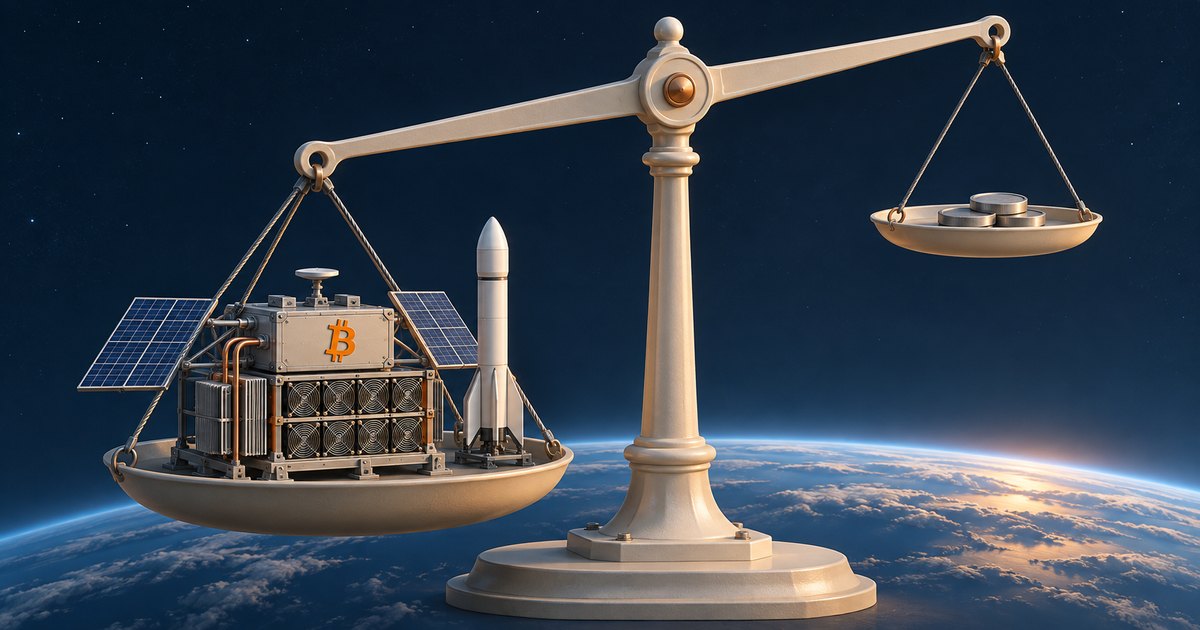
- Launch costs run about $1,500 per kilogram, per BCG estimates cited by U.Today
- A one-ton mining setup would cost about $1.5 million to launch, the writer calculated
- Cheaper launches and better ASICs could improve the math, the writer said
A data center post, applied to Bitcoin
Elon Musk wrote on X on November 4 that data centers in space looked appealing, according to U.Today's account of the post. Musk was talking about data centers. The jump to Bitcoin mining was the U.Today writer's, not his.
The case for it starts with energy. Space has one big advantage, the article said: plenty of solar energy. Bitcoin miners also need little to no bandwidth (the writer called the connection issue "somewhat solved on its own"), so connectivity in orbit isn't a major problem.
Launch and cooling costs
The main problem is getting the gear up there. Solar panels, batteries and power electronics would all have to be launched into orbit, according to U.Today. Cooling doesn't get easier either. The vacuum of space actually makes it harder than on Earth, so an orbital rig would depend on large radiator panels that release heat as infrared radiation.
U.Today cited Boston Consulting Group as estimating that a 100-kilowatt orbital data center could need about 400 square meters of radiators. The article also cited BCG's figure for the current cost of launching to orbit, which is around $1,500 per kilogram. Using that number, the writer calculated that a one-ton mining setup would cost about $1.5 million just to launch.
That's before the hardware itself.
The $1.5 million figure also leaves out cooling, solar arrays and maintenance. The article flagged space radiation, equipment failures and limited chances for repairs as further costs on top of all that.
What would have to change
According to the writer, only two things could make the math look better: more efficient ASIC chips and much cheaper ways of delivering goods to space. The piece added that reusable rockets and lightweight cooling might make orbital mining more financially viable in the future.
"Physically, mining Bitcoin in space is possible: is it justifiable financially though? Not really."
That verdict is U.Today's own analysis, and it's built on BCG's cost estimates as the outlet cited them.
Frequently asked questions
Did Elon Musk propose mining Bitcoin in space?
No. According to U.Today, Musk's November 4 post on X was about data centers in space. The U.Today writer was the one who applied that idea to Bitcoin mining.
Why is Bitcoin mining in space so expensive?
U.Today cited Boston Consulting Group's estimate that launching to orbit costs about $1,500 per kilogram, which works out to about $1.5 million to launch a one-ton mining setup. That doesn't include hardware, cooling, solar arrays or maintenance. The article said radiation, equipment failures and limited repair options would add more costs.
Why is cooling a problem for mining rigs in orbit?
The U.Today article said the vacuum of space makes cooling harder than on Earth, so orbital hardware would depend on large radiator panels that release heat as infrared radiation. It cited BCG as estimating that a 100-kilowatt orbital data center could need about 400 square meters of radiators.
What could make space-based Bitcoin mining viable?
The U.Today writer said more efficient ASIC chips and much cheaper launches were the only things that could improve the economics. The piece added that reusable rockets and lightweight cooling might make space mining more financially viable in the future.