Cardano Foundation puts CIP-0113 token compliance standard live on mainnet
In brief
- CIP-0113 went live on Cardano mainnet, the Cardano Foundation announced at TOKEN2049 on October 7, 2026.
- Native token issuers can freeze, seize and restrict assets, with rules validated by the Cardano ledger.
- CMTA, the Swiss body, sees compliant tokens as comparable to its CMTAT framework, Crypto Briefing reports.
- Opt-in tokens alone are subject to controls; ADA itself is not being made freezable.
How the standard works
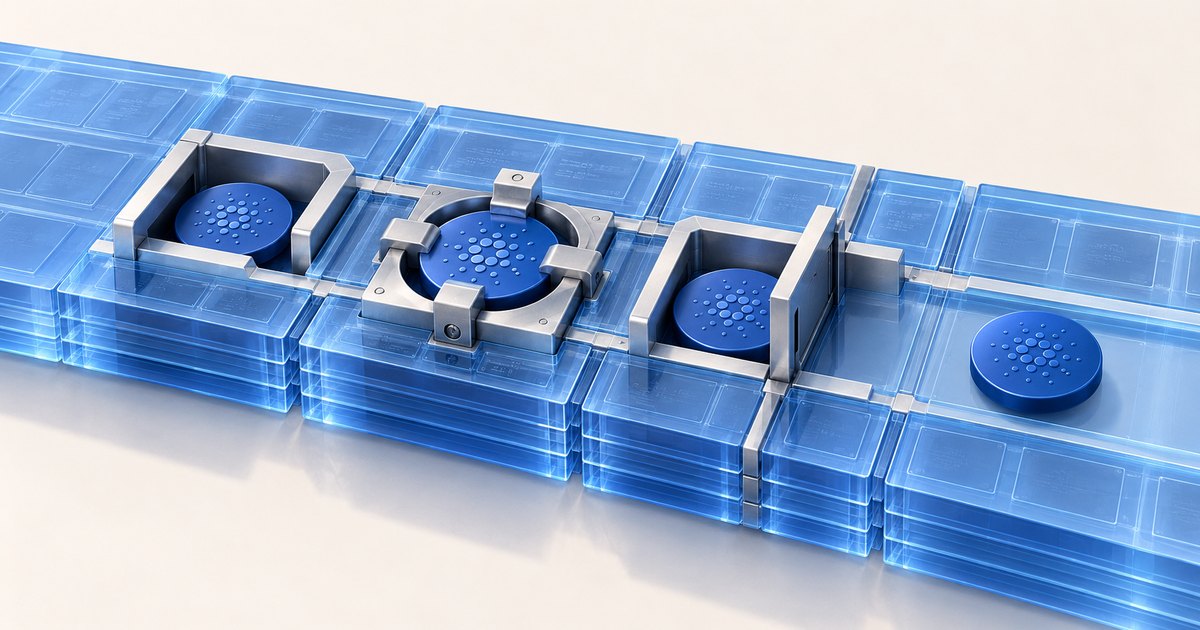
CIP-0113 lets issuers attach rules to their tokens covering KYC and AML checks, sanctions screening and transfer restrictions. Those rules don't sit on an off-chain server or a company dashboard (the Cardano ledger validates them whenever a token is minted, burned or transferred).
The design is modular. According to the Foundation's announcement as reported by Crypto Briefing, a core standard is paired with pluggable substandards that handle token-specific logic, and issuers can write their own custom modules or adjust existing ones over time. The upgrade didn't require a hard fork, and tokens stay native Cardano assets under the chain's eUTXO model.
Crypto Briefing also reported that wallets Eternl and GeroWallet, along with the block explorer CardanoScan, support CIP-0113 functionality.
Who it's built for
The target is regulated assets such as stablecoins and tokenized funds. Crypto Briefing reported that the Swiss Capital Markets and Technology Association (CMTA) has recognized CIP-0113 compliant tokens as comparable to its CMTAT framework, which is used to certify equity securities on-chain in Switzerland.
This wasn't a quick build. Community development and audits on the standard began in 2023, and the proposal was formally merged into the official Cardano Improvement Proposals repository on September 29, 2026.
The trade-offs
Freezable tokens come with a cost.
Crypto Briefing's analysis points out that tokens issued under CIP-0113 can be frozen or seized by their issuers, so holders are trusting the issuer as well as the code. There's also a wrinkle specific to eUTXO: restricting one asset in a shared output could affect other tokens or ADA held in that same output. The standard handles this through what it calls an "unfracking" mechanism, though the report says wallets and defi protocols still face potential challenges handling restricted assets.
Scope matters here. The controls apply only to tokens whose issuers opt into the standard, and ADA itself isn't being made freezable.
Frequently asked questions
What is CIP-0113 on Cardano?
CIP-0113 is a token standard that lets issuers of Cardano native tokens freeze, seize and restrict assets. Issuers can attach rules covering KYC and AML checks, sanctions screening and transfer restrictions. The Cardano ledger validates those rules whenever a token is minted, burned or transferred.
Does CIP-0113 make ADA freezable?
No. According to Crypto Briefing, the controls apply only to tokens whose issuers opt into the standard, and ADA itself is not being made freezable. The standard is designed mainly for regulated assets such as stablecoins and tokenized funds.
What are the risks of CIP-0113 tokens for holders?
Crypto Briefing notes that issuers can freeze or seize CIP-0113 tokens, so holders trust the issuer as well as the code. Restricting one asset in a shared eUTXO output could also affect other tokens or ADA in that output. CIP-0113 uses an "unfracking" mechanism for this, though wallets and DeFi protocols face potential challenges.