Germany's Bundestag passes customs asset-seizure bill covering crypto, Bundesrat next
In brief
- Bundestag passed the Customs Financial Justice Act on November 12, 2026, per Crypto Briefing.
- Customs could temporarily seize suspect assets above €100,000 without opening criminal proceedings.
- Asset holds run up to 30 days, extendable by a finance court to 180 days.
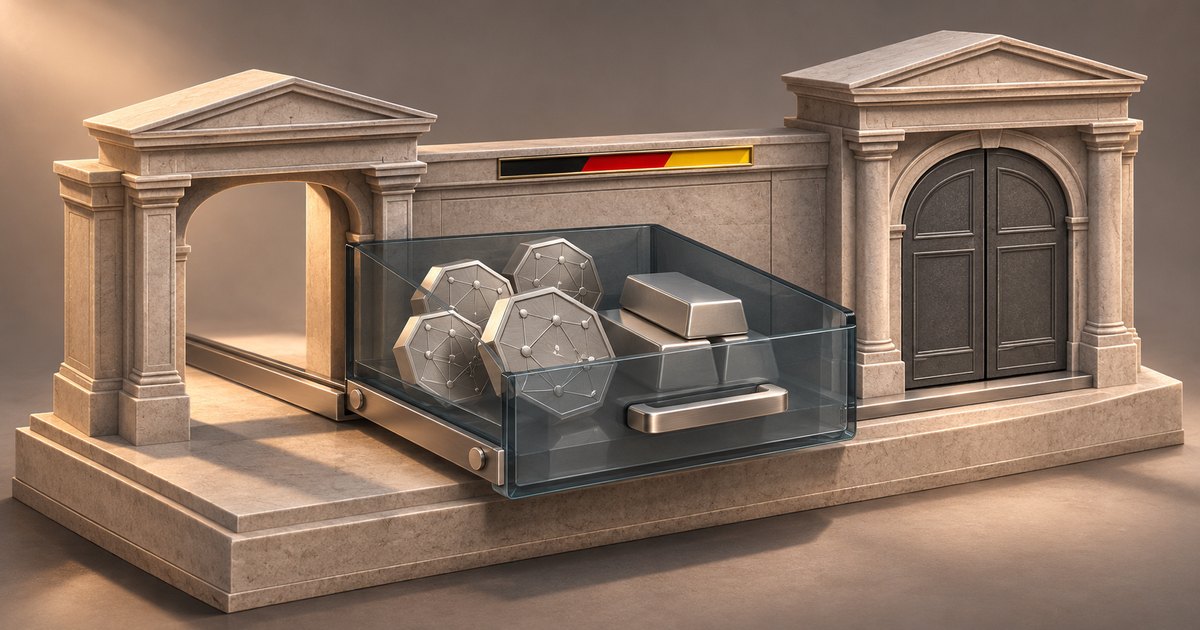
- Crypto falls under the bill via MiCA definitions; no specific tokens or companies are named.
- Bundesrat approval is still required; the bill isn't in force ahead of its planned January 1, 2027 start.
What the bill would let customs do
Under the bill, customs could investigate and secure assets whose lawful origin looks doubtful without first opening criminal proceedings, Crypto Briefing reported. The general trigger is assets worth more than €100,000. For registerable items (real estate and vehicles, for example), the outlet said the bar drops to €50,000.
Seizures above €100,000 would rest on reasonable suspicion. Officials wouldn't need a conviction or an indictment, per the report.
The time limits are where it gets specific. Customs could hold suspect assets for up to 30 days without criminal proceedings, and a finance court could then extend that hold by up to 150 days, which puts the ceiling at 180 days with court approval, according to Crypto Briefing. Permanently taking the assets is a separate step, and it requires a court ruling.
A temporary hold isn't a confiscation.
Where crypto fits
Crypto falls under the bill as defined by the EU's MiCA regulation, the outlet reported. The text doesn't single out particular tokens or companies. It sets a general framework that applies to digital assets, so a seizure would hinge on suspicion about where an asset came from, the same as with property or cars.
Politics, revenue and the next step
The bill builds on the Joint Action Plan against Organised Crime, which Germany launched in February 2026. It also supports the Financial Intelligence Unit (FIU) and expands data-sharing between authorities. The vote drew support from several parties, including the CDU/CSU, the SPD and the AfD, according to Crypto Briefing.
What's the money angle? The German government expects the new powers could generate approximately €308 million in annual revenue by 2028, the outlet reported.
None of this is in force yet. The act is scheduled to take effect on January 1, 2027, but that date depends on the Bundesrat signing off, and until it does, customs doesn't have these powers.
Frequently asked questions
Is Germany's customs asset-seizure law already in effect?
No. The Bundestag passed it on November 12, 2026, but it still needs approval from the Bundesrat, the upper house representing Germany's federal states. According to Crypto Briefing, it's scheduled to take effect on January 1, 2027, pending that approval.
How long could German customs hold seized assets under the bill?
Crypto Briefing reported that customs could hold suspect assets for up to 30 days without criminal proceedings. A finance court could extend the hold by up to 150 days, for a maximum of 180 days. Permanent confiscation would require a separate court ruling.
Does the German customs bill cover cryptocurrency?
Yes. Per Crypto Briefing, crypto falls under the bill as defined by the EU's MiCA regulation. The bill doesn't single out particular tokens or companies and instead sets a general framework that applies to digital assets.
What value of assets would trigger a customs seizure in Germany?
The general threshold is assets worth more than €100,000, according to Crypto Briefing. For registerable items such as real estate and vehicles, the threshold drops to €50,000. Seizures above €100,000 could be made on reasonable suspicion, without a conviction or indictment.