IMF's Georgieva says AI's first wave is already jolting global demand
In brief
- Georgieva said AI's first-wave effects are showing up as demand and investment shocks, per Crypto Briefing.
- AI-related hardware makes up over 10% of global goods trade, according to IMF figures.
- AI adoption could add 0.1 to 0.8 points to annual global growth, the IMF estimates.
- Productivity gains may arrive well after upfront costs are paid, Georgieva warned.
Two forces pulling in opposite directions
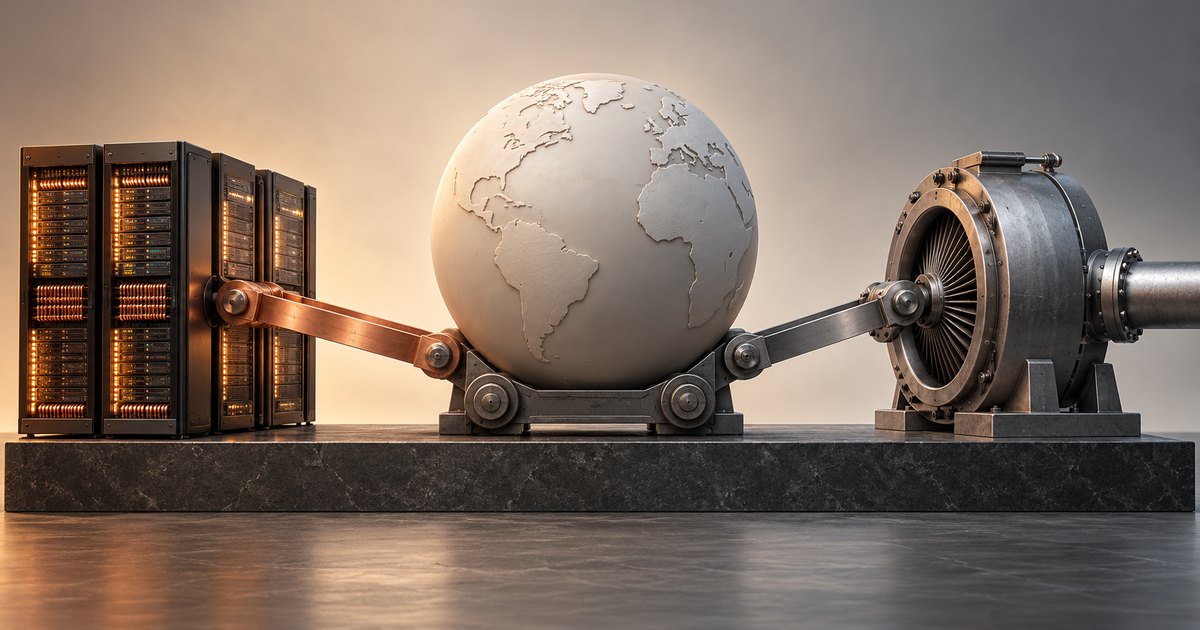
According to Crypto Briefing's account of her remarks, Georgieva described the downward force as a negative energy supply shock linked to Middle East conflicts (she pointed specifically to the closure of the Strait of Hormuz). The upward force is a positive demand shock driven by a surge in AI investment.
That spending covers data centers and hardware. It's been feeding into corporate earnings and consumer demand, and it's come alongside inflationary pressure.
Georgieva said the trend first took hold in the US before spreading to Malaysia, Thailand, Singapore, China and India, where data-center construction and AI hardware production are ramping up quickly.
The numbers behind the IMF's view
The figures, attributed to the IMF via Georgieva, are large. AI-related hardware now makes up over 10% of global goods trade, and AI-related investment is set to match or exceed past technology waves like railroads and telecommunications. The IMF folded AI-related demand into its economic outlook as of July 2026.
On growth, the fund estimates successful AI adoption could add between 0.1 and 0.8 percentage points a year, with a central estimate of 0.5. Over a decade, that's roughly like adding an economy the size of ASEAN.
The payoff isn't immediate, though.
Invoking Amara's Law, Georgieva warned that productivity gains may arrive well after the hefty upfront costs are paid. She also flagged high leverage at firms investing in AI infrastructure and significant foreign investment in US securities tied to the trend. About 60% of jobs in advanced economies could be affected by AI-related technology shocks, per the IMF figures.
What's on the table in Bangkok
Global growth is projected at 3% for 2026 despite multiple headwinds, and global public debt is nearing or exceeding 100% of GDP, according to the IMF figures cited in Crypto Briefing's report. The outlet expects the meetings to focus on fiscal management, AI oversight, rising public debt and energy price pressure.
In its own analysis, the outlet said central banks could be squeezed between supporting growth and containing inflation, with limited fiscal room to work with. That's Crypto Briefing's read (not a statement from Georgieva or the IMF).
Frequently asked questions
What forces did Georgieva say are acting on the global economy?
According to Crypto Briefing, Georgieva described a downward force from a negative energy supply shock linked to Middle East conflicts, including the closure of the Strait of Hormuz. She described an upward force from a positive demand shock driven by a surge in AI investment.
How much could AI add to global growth, according to the IMF?
The IMF estimates successful AI adoption could add between 0.1 and 0.8 percentage points to global growth, with a central estimate of 0.5 percentage points annually. Over a decade, that would be akin to adding an economy the size of ASEAN, as reported by Crypto Briefing.