Iraq seizes 15 drone platforms after Saudi pipeline strikes
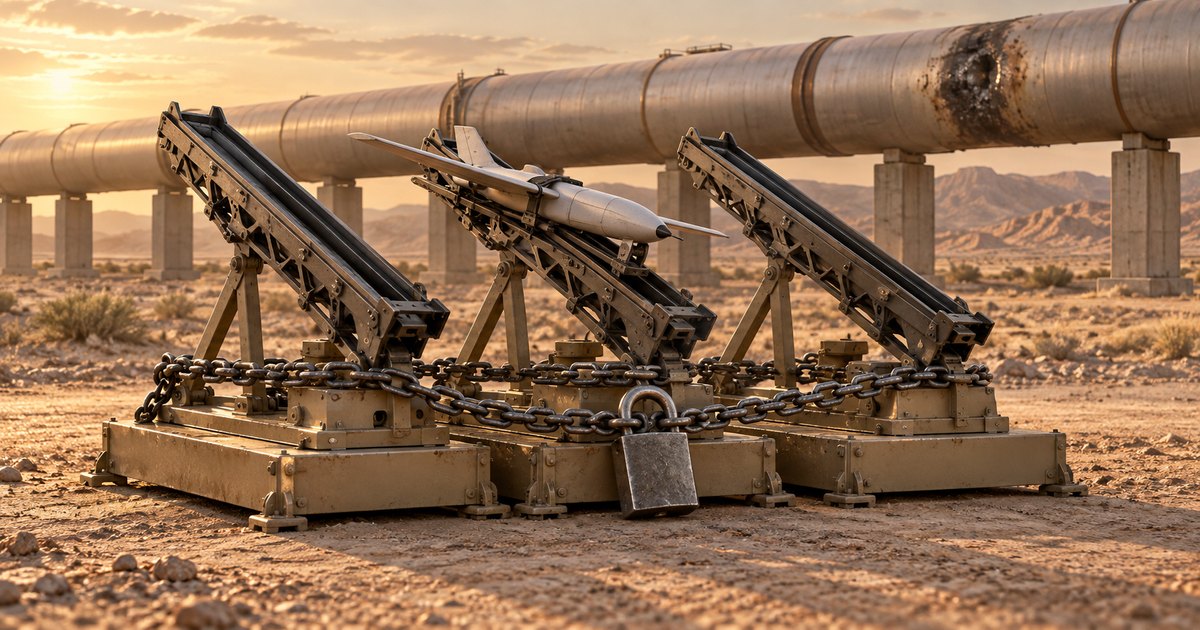
In brief
- Iraqi authorities seized 15 drone platforms and closed three Iran border crossings after Saudi pipeline strikes.
- East-West pipeline carries 4-5% of global oil supply, roughly several million barrels per day capacity.
- Saudi Arabia temporarily shut down the pipeline; oil prices rose sharply following the attacks.
- Prime Minister Ali al-Zaidi vowed Iraq would not permit territory for attacks on neighbors.
- Maysan province in southeastern Iraq identified as launch origin, bordering Iran.
Iraq's swift response
Iraqi Prime Minister Ali al-Zaidi struck a notably firm tone in response, confirming that Iraq would not permit its territory to be used as a staging ground for attacks against neighboring countries. The government's actions extended beyond the seizure of launch platforms. Iraq dismissed the Maysan provincial operations commander and closed three border crossings with Iran, marking Baghdad's most aggressive response to an attack on a neighboring state in recent months.
The pipeline's critical role
The East-West pipeline is no minor infrastructure. It handles roughly 4-5% of global oil supply, representing several million barrels per day of capacity. Saudi Arabia built the pipeline precisely to reduce dependence on the Strait of Hormuz, where roughly 20% of the world's oil passes through daily. Drones struck the pipeline over a multi-day window in early September 2026, causing injuries and significant material damage. Saudi Arabia temporarily shut down the pipeline as a precaution, and oil prices rose sharply following the attacks, driven by straightforward supply anxiety.
Restraint and investigation
Riyadh identified the launch origin as Maysan province in southeastern Iraq, a region bordering Iran. Despite the damage and injuries, Riyadh held off on immediate military retaliation. Saudi officials acknowledged their right to defend critical infrastructure but deferred to Baghdad's request for time to complete its investigation. This restraint reflects a delicate balance between defending national interests and avoiding further escalation in an already tense region.
The pattern isn't new. Similar accusations surfaced in late July 2026 involving oil facilities in the kingdom, suggesting a pattern rather than an isolated incident. Iraq's decisive action signals it intends to prevent its territory from becoming a staging ground for attacks on neighbors — a critical stabilizer for regional oil supply chains already vulnerable to geopolitical friction.