Moscow Exchange launches crypto perpetual futures with 600B ruble turnover
In brief
- MOEX launched perpetual futures for BTC, ETH, SOL, XRP, and TRX on September 22, settling exclusively in rubles
- Contracts automatically roll daily with cash settlement only; no cryptocurrency delivery to qualified investors
- Over 72,000 qualified investors traded MOEX crypto derivatives; cumulative turnover exceeded 600 billion rubles
New Contracts Track Major Cryptocurrencies
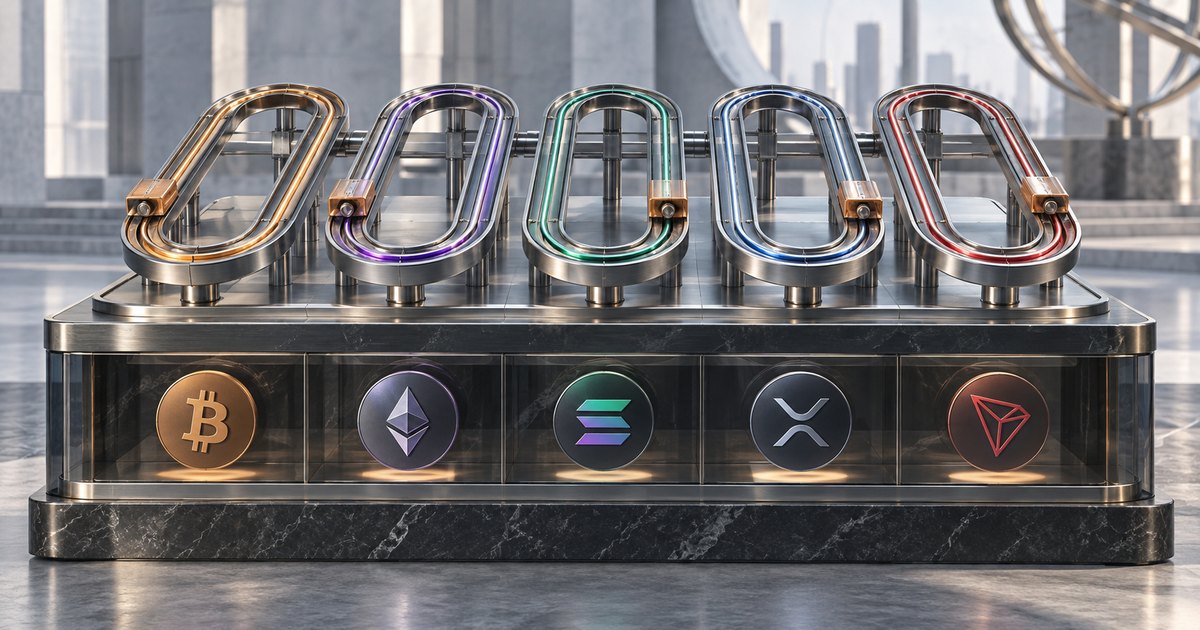
Moscow Exchange's five perpetual futures contracts track Bitcoin, Ethereum, Solana, XRP, and Tron prices. The contracts are designated BTCUSDF, ETHUSDF, SOLUSDF, XRPUSDF, and TRXUSDF.
The structure differs fundamentally from spot crypto trading. Unlike spot markets, these futures do not deliver any cryptocurrency. Instead, they're quoted against US dollar-denominated indexes, while profits and losses settle in Russian rubles.
Each contract lasts one day and automatically rolls into the next trading period, allowing investors to maintain positions without manually switching contracts at expiration. This rolling structure removes the friction of traditional futures that expire.
Margin Requirements and Risk Limits
MOEX set tiered margin rates across the five contracts. Bitcoin carries the lowest requirement at 22%, while XRP carries the highest at 43%. Ethereum, Solana, and Tron are set at 35%, 38%, and 30% respectively.
The exchange also established concentration limits for each contract. These LK1 and LK2 limits vary significantly by asset—XRPUSDF ranges from 961 to 4,807 contracts, while ETHUSDF reaches 124,490 to 622,450.
Funding parameters K1 and K2 were set at 0% and 0.35% respectively, governing how long positions are financed.
Investor Adoption Accelerates
Access to these perpetual futures is limited to qualified investors. As of mid-September, more than 72,000 qualified investors had traded MOEX's digital-asset futures. Cumulative turnover in those products has exceeded 600 billion rubles, signaling robust demand for regulated crypto derivatives in Russia.
The perpetual structure provides price exposure without requiring investors to hold Bitcoin, Ethereum, or other tokens directly. This appeals to institutional and qualified retail participants seeking leverage and hedging tools within a regulated framework.
Frequently asked questions
What are perpetual futures and how do they differ from spot crypto trading?
Perpetual futures are contracts that track cryptocurrency prices without delivering the underlying assets. Unlike spot trading where you own the actual crypto, perpetual futures settle in cash (in this case, Russian rubles) and allow investors to maintain long or short positions indefinitely through automatic daily rollovers.
Why would investors use MOEX perpetual futures instead of buying cryptocurrency directly?
MOEX perpetual futures provide price exposure without requiring investors to hold, store, or secure cryptocurrency. They operate within a regulated framework, offer leverage through margin trading, and allow positions to roll automatically each day without manual contract switching.
What are margin requirements and why does XRP have the highest?
Margin requirements are the minimum amount of capital you must deposit to open a position. MOEX set XRP's requirement at 43% (the highest among the five), compared to Bitcoin at 22% and Ethereum at 35%. Higher margins typically reflect greater perceived volatility or risk.