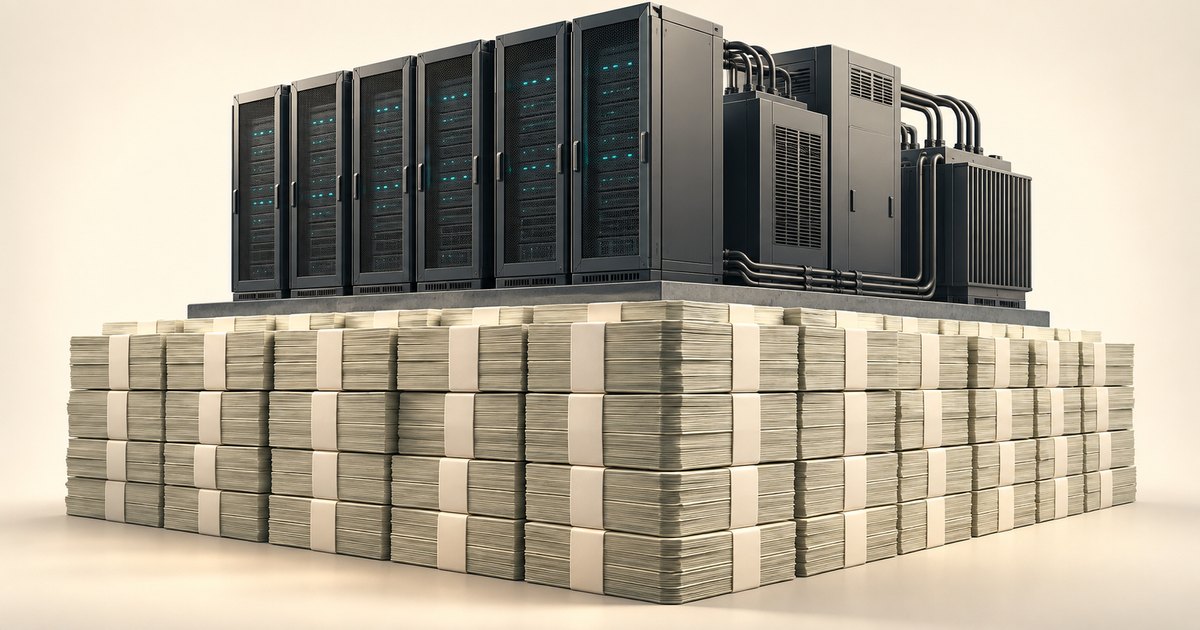
Nvidia CEO: AI infrastructure costs $50B–$60B per gigawatt
In brief
- Jensen Huang told G20 officials a single gigawatt of AI infrastructure costs $50B–$60B to build
- G20 Innovation Ministerial in Chapel Hill produced two headline agreements on AI governance and investment
- US pushed hands-off regulatory approach, opposing preemptive rules targeting theoretical AI harms
- Both documents center on research investment, commercialization, trusted adoption, and public-private partnerships
- No formal funding commitments or enforcement mechanisms emerged from the ministerial
The cost of AI scale
One gigawatt is roughly the power output of a large nuclear plant. Huang's figure underscores the staggering capital requirements for nations seeking to compete in AI. He framed the challenge not as a technology problem but as infrastructure policy. "If countries want to compete in the AI race, they need to start thinking about compute capacity the same way they think about roads, water systems, and the electrical grid," Huang said.
The implication is stark. Gigawatt-scale buildout isn't a startup problem or a single-company problem. It demands coordinated government investment, cross-border collaboration, and long-term planning horizons that most democracies have struggled to sustain.
What the ministerial produced
The G20 Innovation Ministerial produced two headline deliverables: the Carolina Principles for Emerging Technologies and the AI Prosperity Objectives Compact. Both documents center on four pillars: boosting research investment, promoting commercialization, fostering trusted adoption of AI tools, and strengthening public-private partnerships.
The US delegation pushed a notably hands-off regulatory posture, arguing against preemptive rules targeting theoretical harms from AI. That stance reflects Washington's bet that light-touch governance will accelerate innovation faster than prescriptive rules.
The infrastructure imperative
Huang emphasized that AI infrastructure must meet three criteria: durability (built to last through multiple generations of models rather than becoming obsolete every 18 months), fungibility (flexible enough to run different workloads, not locked into one architecture), and software-upgradeability (designed to improve through software updates without full replacement).
Sam Altman and Tom Brown reportedly echoed the urgency around infrastructure buildout and cross-border collaboration, signaling alignment across industry leaders on the scale of the challenge.
Notably, no formal funding commitments were made, and no specific enforcement mechanisms were outlined. The ministerial produced consensus on principles, not capital. That stance is expected to carry through to the G20 leaders' summit scheduled for Miami in December 2026.