UK sanctions three crypto exchanges and two payment platforms over Russia links
In brief
- FCDO sanctions target three crypto exchanges and two payment platforms suspected of aiding Russian sanctions evasion.
- Kyrgyzstan was linked to three of the five; two facilitated transactions with the Kremlin-backed A7 network.
- Cryptomus and Heleket received funds from thousands of illicit counterparties, according to Chainalysis.
- TokenSpot, Grinex and Meer received over $308 million from a single HTX deposit address, per Chainalysis.
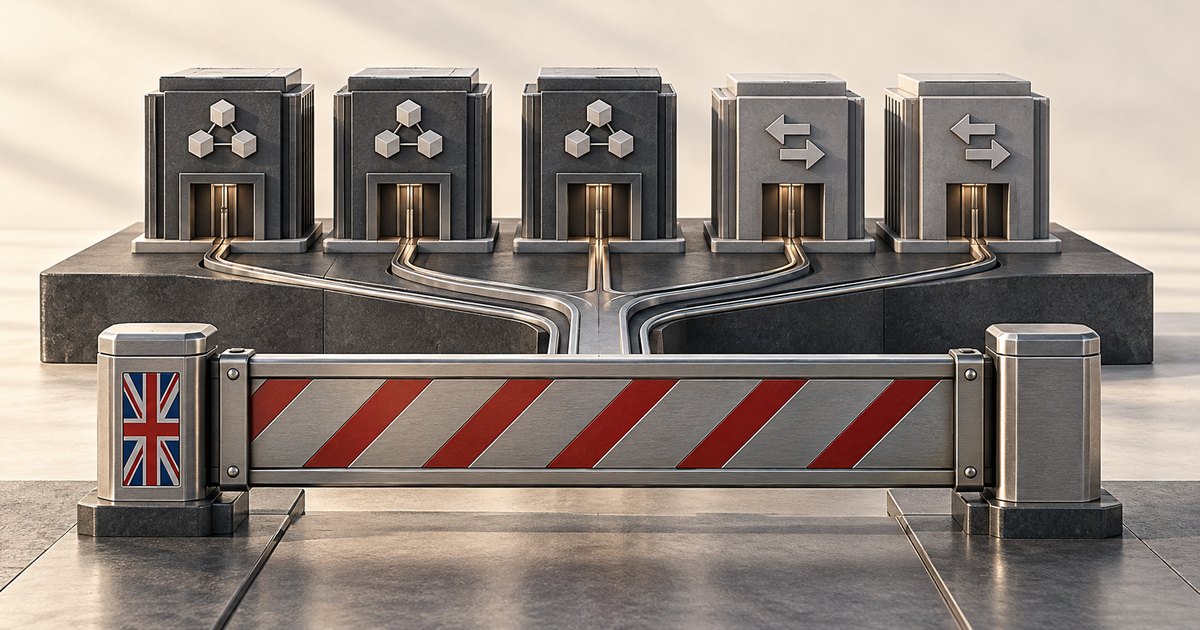
Five platforms in total: three exchanges and two payment processors.
What the FCDO said
The government's reasoning is simple. Cutting off these platforms makes it harder for sanctioned entities to move and access funds, the Foreign Ministry said, according to Cointelegraph.
A7 sits at the center of it. According to the FCDO, the A7 financial network claimed to have moved more than $90 billion last year, which is nearly half of Russia's annual military spending. That number is A7's own claim, as the FCDO framed it (not a figure the UK government says it measured itself).
What Chainalysis found in the flows
Chainalysis found that two of the sanctioned payment processors, Cryptomus and Heleket, received funds from thousands of illicit counterparties. By its count, the number of those counterparties peaked at 900 entities in a single month in late 2025.
TokenSpot, a Kyrgyzstani exchange that's also on the list, was tied to the A7 network as well. Chainalysis determined that TokenSpot, along with Grinex and Meer, received over $308 million from the same HTX deposit address. That's a statement about where the funds came from. It doesn't establish what any of these platforms intended.
The HTX connection
HTX isn't new to this story. In May, UK authorities included Huobi Global, the operator of crypto exchange HTX, in a sanctions package. HTX pushed back at the time, arguing the designation applied only to Huobi Global as a separate legal entity and that its online exchange and user funds weren't affected.
The ruble side of the A7 operation hasn't slowed down either. According to CertiK, the Russian ruble-backed A7A5 stablecoin processed $110 billion in cumulative onchain transactions leading up to June, and it kept growing despite Western sanctions.
So what do the named platforms say? Cointelegraph approached TokenSpot, Cryptomus and Heleket for comment, and none of them had commented when the outlet published.
Frequently asked questions
Which crypto platforms did the UK sanction over Russia?
The UK's FCDO sanctioned three cryptocurrency exchanges and two payment platforms it suspects of helping Russian entities get around financial sanctions. They include the Kyrgyzstani exchange TokenSpot and the payment processors Cryptomus and Heleket. According to the FCDO, three of the providers were linked to Kyrgyzstan.
What is the A7 network and why does it matter to these sanctions?
A7 is a Kremlin-backed financial network. According to the FCDO, two of the sanctioned providers facilitated transactions with it. The FCDO said A7 claimed to have moved more than $90 billion last year, nearly half of Russia's annual military spending.
How is HTX connected to the newly sanctioned exchanges?
Chainalysis determined that TokenSpot, Grinex and Meer received more than $308 million from the same HTX deposit address. In May, UK authorities sanctioned Huobi Global, HTX's operator. HTX argued that designation applied only to Huobi Global as a separate legal entity and didn't affect its exchange or user funds.