US, Denmark, Greenland finalize trilateral security deal
In brief
- US secures permanent military access and basing rights on Greenland under trilateral security agreement
- Agreement blocks non-NATO military bases, targeting Russian and Chinese Arctic expansion
- Arctic melting accelerates competition for shipping routes and rare earth mineral reserves
- Greenland affirms self-determination and sovereignty despite expanded US military presence
Military Access and Sovereignty Safeguards
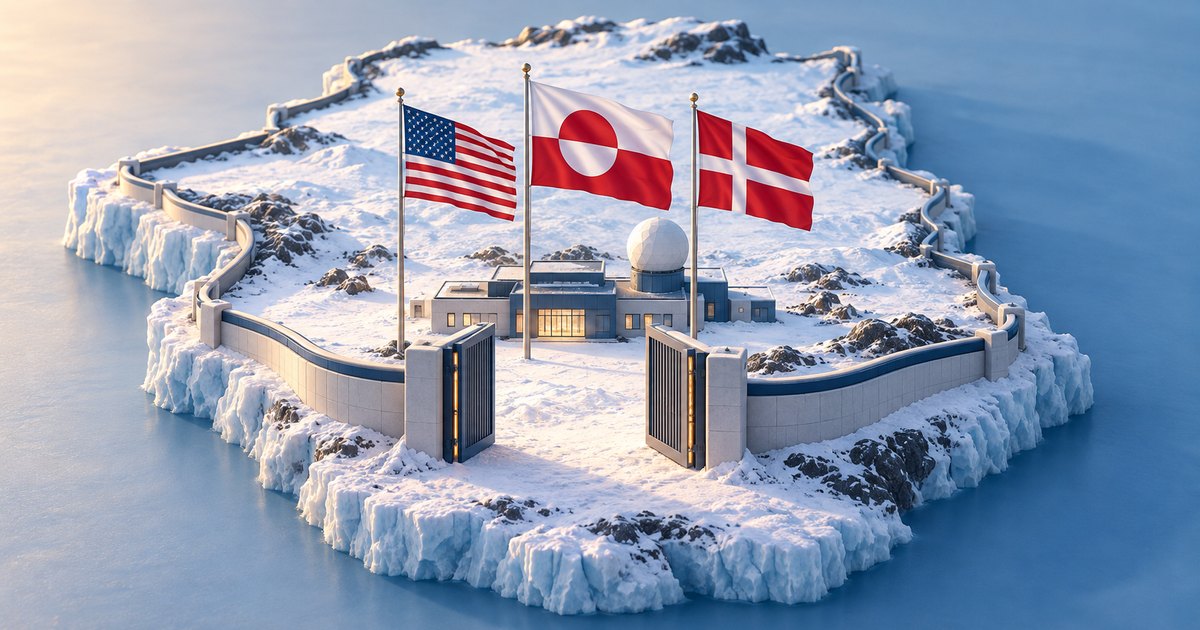
The agreement grants the United States permanent military rights on Greenland while explicitly protecting Danish and Greenlandic sovereignty. Danish and Greenlandic leaders emphasized that no territory was transferred and Greenland's right to self-determination remains intact. Greenland has been self-governing since 2009 and is on a path toward full independence from Denmark.
The deal includes a prohibition on non-NATO countries establishing military bases or maintaining military presence on Greenland. It also contains provisions for screening foreign investments by adversarial nations, adding an economic security layer to the military framework.
The US already operates Pituffik Space Base in northwestern Greenland, formerly known as Thule Air Base. The new agreement formalizes and expands this footprint as Arctic competition sharpens.
Arctic Competition Heats Up
Russia has been militarizing its Arctic coastline for years, reopening Soviet-era bases and building new ones. China declared itself a "near-Arctic state" in 2018 and has been investing in infrastructure and research across the region. Greenland's mining sector has attracted interest from Chinese companies in recent years, prompting Western concern over resource access.
Melting sea ice is opening shipping routes that could shave days or weeks off transit times between Asia, Europe, and North America. The region also sits atop vast reserves of rare earth elements and critical minerals essential for semiconductors and electric vehicle batteries. With a population of roughly 56,000 people and limited domestic investment capacity, Greenland faces pressure to balance resource development with geopolitical alignment.
The deal reflects Washington's pivot to Arctic security as a strategic priority, locking in military access before rival powers deepen their foothold in the region.