Vitalik Buterin backs leanPCS approach behind Ethereum's draft EIP-8288

In brief
- Vitalik Buterin said on X he went from calling leanPCS "total bull" to being "a total bull."
- Draft EIP-8288 aims to make quantum-resistant Ethereum transactions cheaper and smaller.
- Post-quantum signature verification on Ethereum reportedly costs 150,000 to 200,000 gas today.
- EIP-8288 targets verification costs in the low tens of thousands of gas.
- EIP-8288 remains a draft, and its reference implementation is unfinished.
Why signature size matters
A standard Ethereum signature takes up 65 bytes. It's compact. It also relies on cryptography that sufficiently powerful quantum computers could, in theory, eventually break.
Replacing it isn't cheap. According to the EIP-8288 research findings as reported by Crypto Briefing, current post-quantum signatures run 2 to 3+ kB in size, and verifying them on Ethereum costs 150,000 to 200,000 gas. Quantum-safe private transactions can reach roughly 10 million gas (which puts them out of reach for most everyday use on the network).
How EIP-8288 works
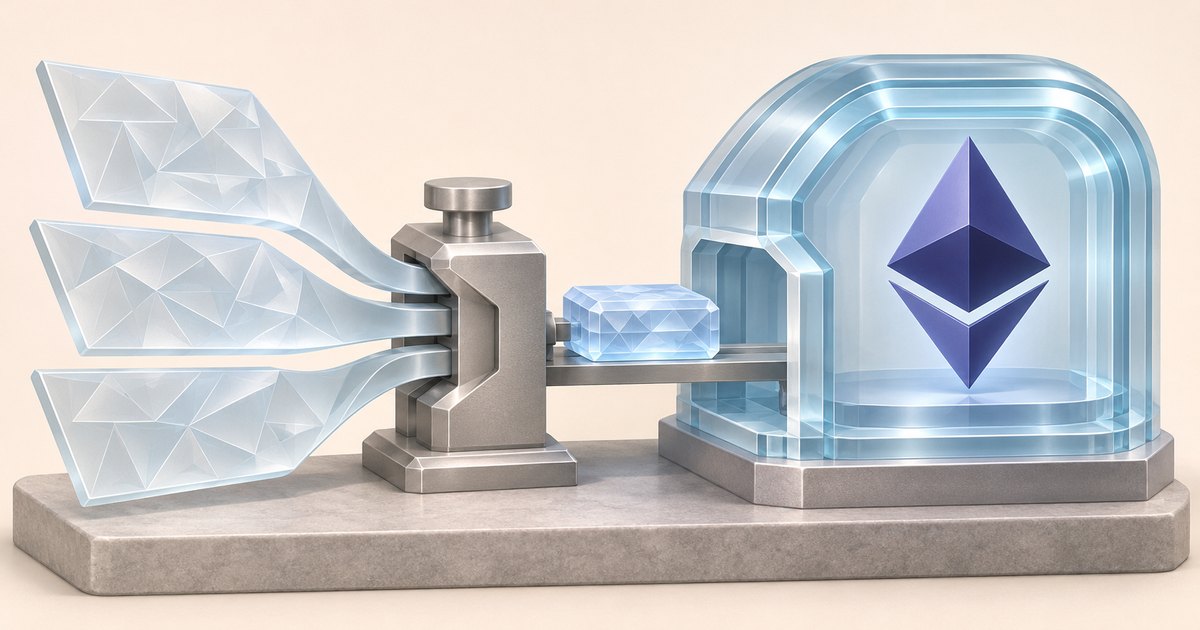
EIP-8288 tackles this through recursive STARK aggregation in Ethereum's mempool. Many heavy signatures get checked off-chain and folded into a single compact proof, so transactions can carry small dependency claims instead of full signatures. Those claims reportedly come in at around 64-96 bytes.
The goal, per the research findings, is to bring post-quantum verification down to the low tens of thousands of gas. The same aggregation approach is meant to support zero-knowledge proofs as well, not just quantum-safe signatures.
Buterin's change of heart came in a short post on X.
“Over the past few weeks I’ve gone from thinking leanPCS is total bull to being a total bull,” Buterin wrote in a post on X.
Where it sits on the roadmap
EIP-8288 was created on June 3, 2026. It sits inside the broader Lean Ethereum roadmap, which targets post-quantum security for the network, and Crypto Briefing reported that roadmap is projected for completion around 2028-2029.
That's a projection, not a schedule. The proposal hasn't moved past draft status, and its reference implementation is still unfinished (a draft EIP is a promise, not a shipped feature, regardless of who's backing the idea behind it).
Frequently asked questions
What is EIP-8288?
EIP-8288 is a draft Ethereum proposal created on June 3, 2026, designed to make quantum-resistant transactions cheaper and smaller. It uses recursive STARK aggregation in Ethereum's mempool and sits inside the broader Lean Ethereum roadmap. Its reference implementation is unfinished.
Why are post-quantum signatures expensive on Ethereum?
A standard Ethereum signature takes up 65 bytes, while current post-quantum signatures run 2 to 3+ kB, according to the EIP-8288 research findings reported by Crypto Briefing. Verifying them costs 150,000 to 200,000 gas, and quantum-safe private transactions can reach roughly 10 million gas.
How does EIP-8288 lower verification costs?
Many heavy signatures are checked off-chain and folded into a single compact proof. Transactions then carry small dependency claims instead of full signatures. The proposal aims to bring post-quantum verification down to the low tens of thousands of gas.