Vitalik Buterin backs leanPCS as faster path to quantum-safe Ethereum
In brief
- Vitalik Buterin went from calling leanPCS "total bull" to being "a total bull."
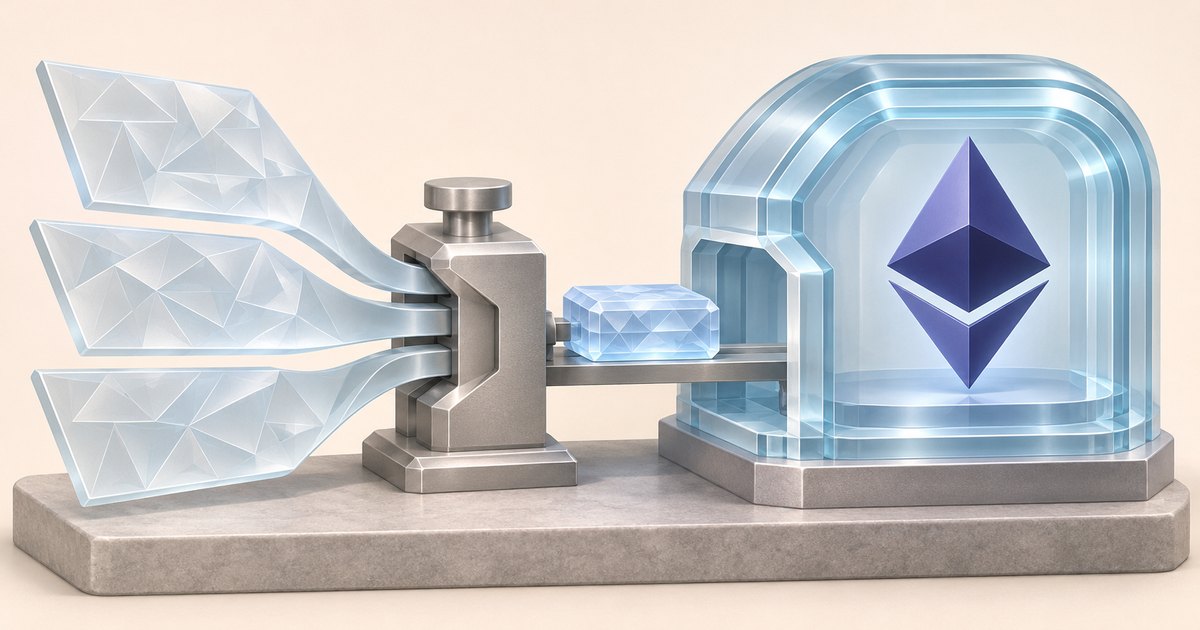
- leanPCS would bundle large quantum-safe signatures and proofs into one compact proof.
- leanPCS is one of three designs under EIP-8288, a draft co-authored with Thomas Coratger.
- Quantum-safe signatures would grow from 65 bytes to 1-6 kilobytes, Buterin said.
Why size is the problem
Quantum computers are expected to eventually break the elliptic curve cryptography that secures Ethereum and Bitcoin accounts. The replacements are much bigger. Buterin said signatures would grow from 65 bytes to between 1 and 6 kilobytes, while zero-knowledge proofs would go from a few hundred bytes to around 128 kilobytes.
He wrote that putting that data on chain isn't sustainable.
How EIP-8288 would work
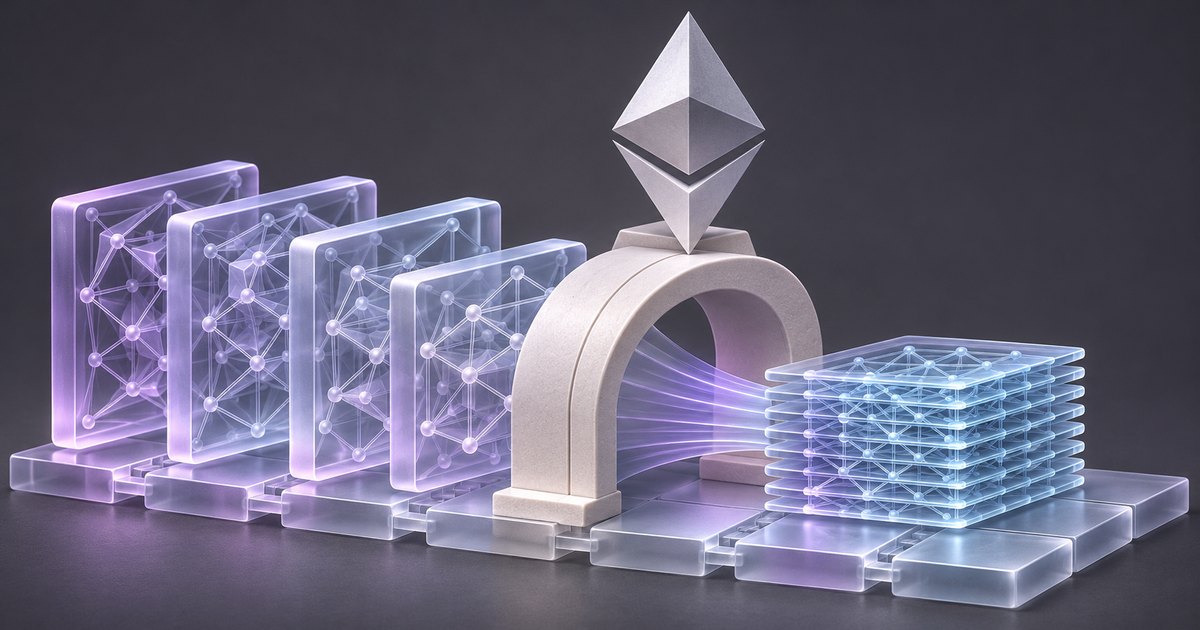
Buterin's answer is EIP-8288, a draft proposal he co-authored with developer Thomas Coratger in June. Network nodes would repeatedly bundle the signatures or proofs they've seen into a single STARK attesting the data is valid, and those aggregates get combined until one "master proof" verifies everything in a block (only short claims land onchain).
He laid out three ways to build it. The simplest, leanSPHINCS, would support one type of quantum-safe, hash-based signature at a small gas cost per signature, but it couldn't do anything else. At the other end, leanSTARK would be fully general, open to any signature scheme, privacy protocols or hidden multisig logic. The catch? Ethereum would first have to agree on a programming language for users' programs, which Buterin called the first big case of Ethereum moving beyond the EVM, and that's likely to take time.
His preferred option is leanPCS. It's built on polynomial commitment schemes (the core building block of STARK proofs) and would offer the same generality as leanSTARK. In Buterin's view, it could potentially be implemented very quickly because fewer design choices are needed, with leanSTARK added later.
"So there is a route to getting 'the cryptographic proof singularity' much faster than any of us expected," Buterin wrote.
The gas math
A SPHINCS- post on the Ethereum Research forum in June, written with input from Buterin and Ethereum Foundation cryptographers, showed a standards-aligned quantum-safe signature can already be verified for about 150,000 gas without a protocol change. An ECDSA signature costs about 3,000 gas, per an earlier Buterin estimate. Under protocol-level aggregation, a future leanSPHINCS verification would also cost about 3,000 gas, according to the post.
EIP-8288 is still a draft, and leanPCS is Buterin's preferred route, not adopted policy. The Ethereum Foundation formed a dedicated post-quantum team in January, and developers have proposed overhauling the staking deposit contract to support post-quantum validator keys. Buterin has said the network is betting its future on quantum security and privacy.
Frequently asked questions
What is leanPCS?
leanPCS is a proposed way for Ethereum to bundle many large, quantum-safe signatures and proofs into a single compact proof so the full data doesn't need to be stored onchain. It's built on polynomial commitment schemes, the core building block of STARK proofs, and is Buterin's preferred option under the draft EIP-8288.
Why does Ethereum need to aggregate quantum-safe signatures?
Quantum computers are expected to eventually break the elliptic curve cryptography securing Ethereum accounts. Buterin said quantum-safe signatures would grow from 65 bytes to between 1 and 6 kilobytes, and zero-knowledge proofs to around 128 kilobytes, which he called unsustainable to put on chain.
How much gas would a quantum-safe signature cost on Ethereum?
A June Ethereum Research forum post on SPHINCS- showed a standards-aligned quantum-safe signature can be verified for about 150,000 gas without a protocol change, versus about 3,000 gas for ECDSA per an earlier Buterin estimate. Under protocol-level aggregation, a future leanSPHINCS verification would cost about 3,000 gas, according to the post.