Huawei unveils chip tech to close TSMC gap, bypass US export controls

In brief
- Huawei unveiled Tau Scaling Law and LogicFolding at IEEE symposium, targeting 1.4nm-equivalent density by 2031.
- Technologies aim for comparable density without EUV lithography, which US export controls restrict from Chinese firms.
- Roadmap could shrink TSMC's five-year technology lead to three years by 2031 if successful.
Novel Architecture Sidesteps EUV Bottleneck
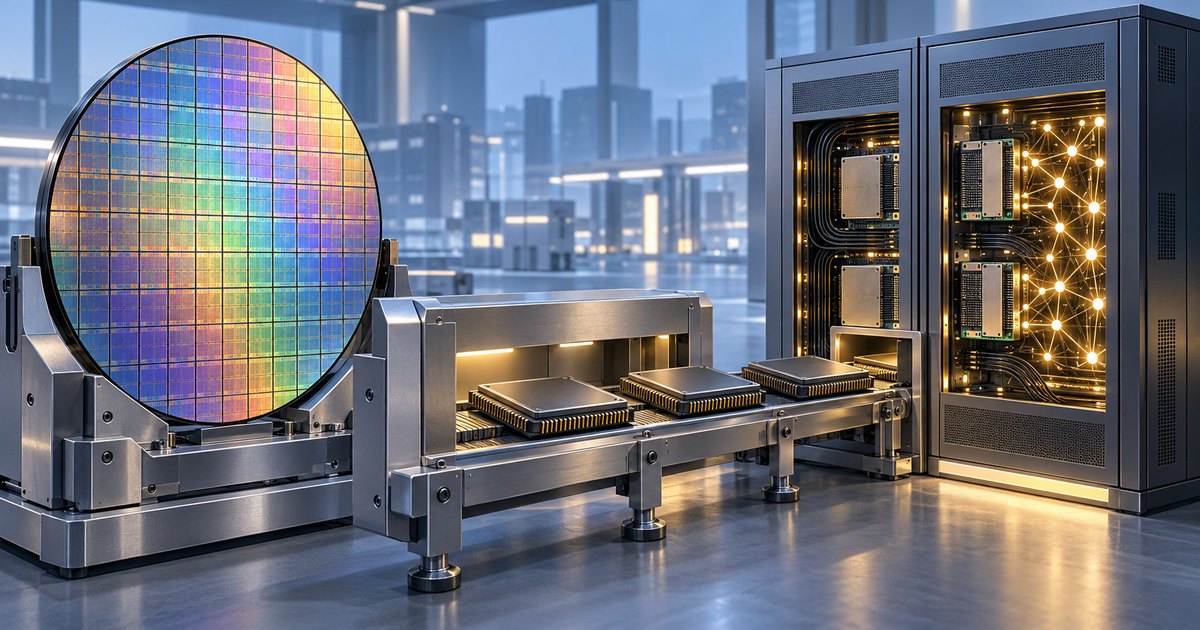
Huawei's Tau Scaling Law and LogicFolding represent an attempt to achieve comparable transistor density without EUV lithography machines. EUV equipment is manufactured by ASML in the Netherlands and costs hundreds of millions of dollars per unit. US export controls prevent Chinese firms like Huawei and SMIC from purchasing them, creating a critical bottleneck in China's chipmaking ambitions.
The strategy is direct: bypass the machines entirely. Rather than chasing the same lithography path as TSMC, Huawei's approach uses alternative methods to pack transistors more densely. He Tingbo, president of Huawei's semiconductor division, revealed that the company has already mass-produced 381 chips based on these principles over the past six years.
Closing the Gap, But Not All the Way
The current technology gap between TSMC and Huawei/SMIC sits at roughly five years. TSMC is the undisputed king of contract chipmaking, fabricating processors for Apple, Nvidia, AMD, and essentially every company pushing the frontier of computing performance. TSMC is targeting mass production of actual 1.4nm chips by 2028, giving it a three-year head start.
Huawei's 2031 target for 1.4nm-equivalent density would, if achieved, shrink that gap to about three years. That's progress, but it's not parity. The critical caveat: matching transistor density is not the same as matching performance, power efficiency, or yield rates. Density is one metric among many.
Redefining Export Control Strategy
SMIC, China's largest foundry and Huawei's primary manufacturing partner, is expected to play a central role in producing chips using these new architectures. The announcement directly tests a core assumption behind US sanctions: that controlling access to EUV machines would freeze China's semiconductor progress indefinitely. Huawei's announcement directly challenges that premise.
Whether the company can execute on its 2031 roadmap remains an open question. Engineering breakthroughs in semiconductor design don't always translate to production at scale. But the signal is clear: US export controls have created incentives for alternative architectures, not halted innovation.