Orlen loses $400M in Venezuelan oil scheme routed through crypto
In brief
- Orlen transferred $330 million to Dubai intermediaries for Venezuelan crude that never arrived.
- Cryptocurrency conversions caused the funds to vanish, per investigators.
- Three former Orlen managers indicted August 2026 on negligent supervision charges, facing 25-year sentences.
- Trades exploited a brief sanctions relief window in late 2023 and early 2024.
How the scheme unfolded
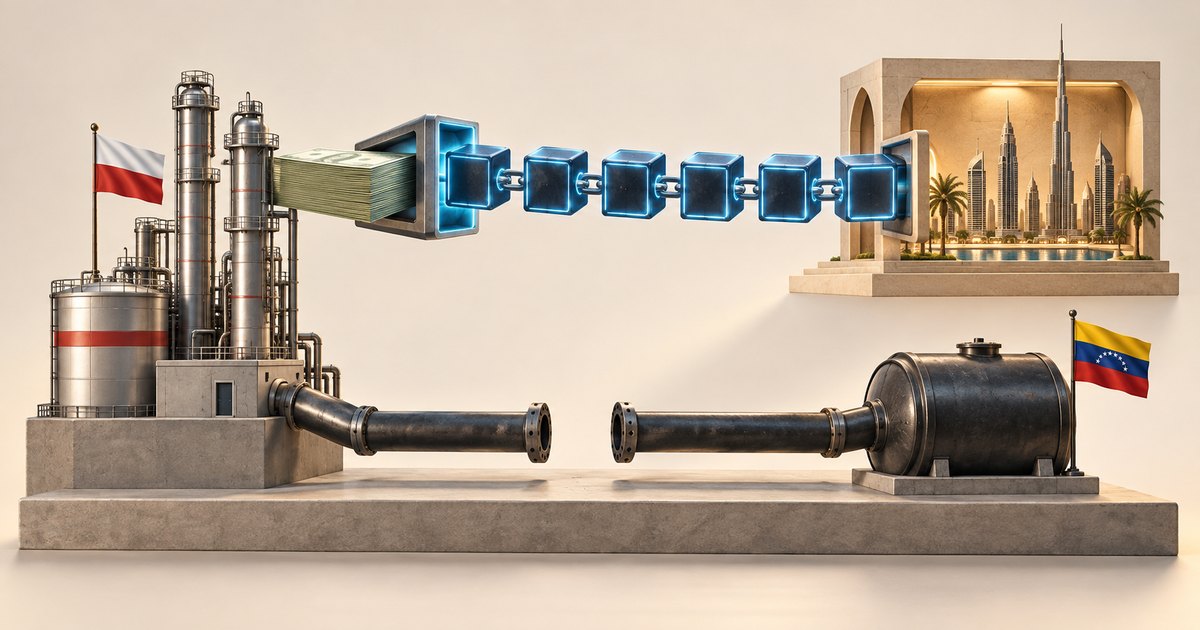
Orlen sent roughly $230 million to a Dubai-based intermediary called Hannon International Middle East DMCC for Venezuelan crude that never arrived. Then another $100 million went to a second middleman, also in Dubai, Horizon Global, for oil that also never arrived.
The money, according to investigators, appears to have been converted into cryptocurrencies and effectively vanished. Polish prosecutors have valued the total losses at around 1.6 billion zloty, roughly $400 million. That figure includes prepayments and demurrage costs from idle tankers sitting in port waiting for crude that would never come.
Both payments were supposed to facilitate deliveries of Venezuelan crude during a narrow window in late 2023 and early 2024, when the Biden administration granted Venezuela temporary sanctions relief in October 2023. The timing was critical. Venezuela's state oil company PDVSA had begun preferring USDT settlements for spot crude deals around this period, making cryptocurrency the path of least resistance for international oil buyers navigating sanctions complexity.
The regulatory collapse
Orlen was left holding prepayment receipts for oil that could no longer legally be shipped. Washington reimposed strict sanctions on Venezuela in April 2024 after President Nicolás Maduro failed to meet democratic benchmarks. That window slammed shut. The oil Orlen had prepaid for became untouchable under US law, and the intermediaries' crypto holdings had already moved beyond recovery.
Three former Orlen managers were indicted in August 2026 on charges of negligent supervision. They face potential prison sentences of up to 25 years.
The scandal underscores how cryptocurrency's opacity and speed can obscure the trail in sanctioned-trade schemes. Venezuela recorded approximately $44.6 billion in crypto transaction flows in 2025, a figure driven significantly by its energy sector's embrace of digital assets as a workaround to traditional banking restrictions. When geopolitical winds shift—as they did with the April 2024 sanctions reimposition—those digital trails often lead nowhere.