Trump hosts Xi for Washington summit as tariff truce expires
In brief
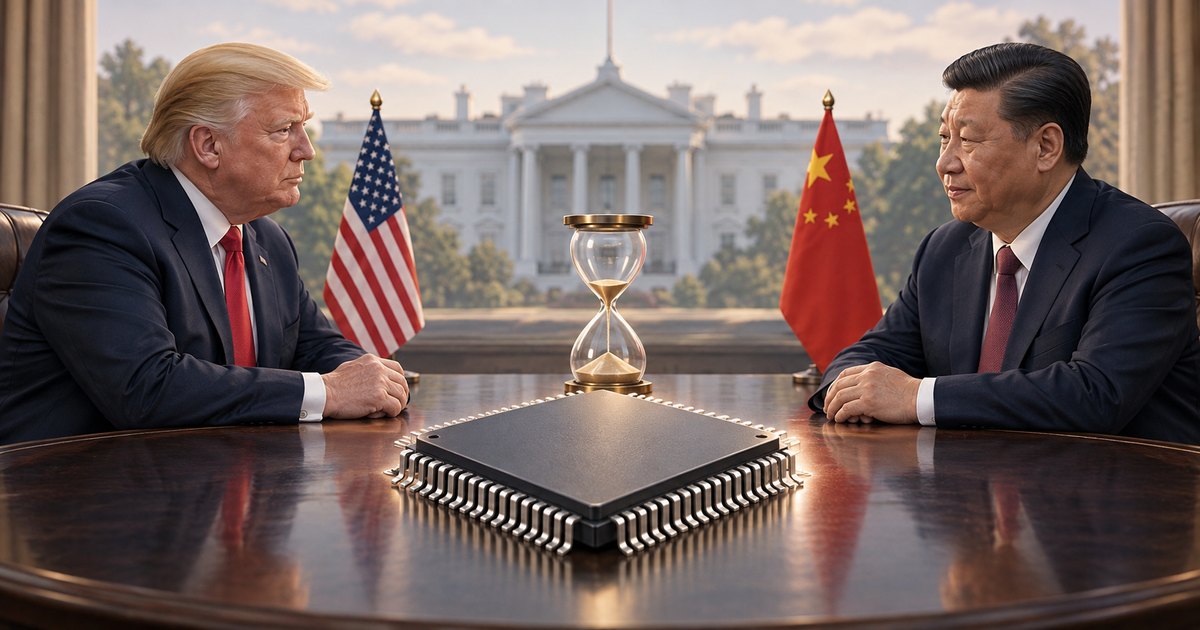
- Trump and Xi meet in Washington Sept. 23-24, their second face-to-face meeting in four months
- Busan tariff truce expires later in 2026 with no clear renewal signal from either side
- AI governance woven into economic talks alongside trade, Taiwan, and Iran disputes
- Sam Altman, Jensen Huang, Tim Cook expected at state dinner; Xi unlikely to bring comparable tech delegation
The stakes: a truce at an inflection point
The Busan agreement suspended certain tariffs and export controls for a year, creating a window of relative calm for businesses on both sides of the Pacific. That window closes later in 2026. If the Washington summit reaffirms the truce and signals willingness to extend it past its late-2026 expiration, trade-sensitive sectors and tech stocks would likely see a boost. If not, the tariff regime could harden significantly.
The May 2026 Beijing summit, which preceded this one by four months, produced institutional frameworks including a Board of Trade and Board of Investment. That meeting also secured purchase commitments by China for agricultural goods and aircraft, though it did not resolve core disputes such as Taiwan's status or regulation of advanced chip exports.
Why tech CEOs are paying attention
Sam Altman of OpenAI, Jensen Huang of Nvidia, and Tim Cook of Apple are all expected to attend the state dinner. The presence of these executives signals the centrality of technology to the bilateral conversation. Nvidia has spent the past two years navigating increasingly restrictive US export controls on advanced semiconductors, which were partially suspended under the Busan truce. Apple manufactures the vast majority of its devices in China.
Notably, Xi is not expected to bring a comparable delegation of Chinese tech CEOs. This asymmetry reflects deeper structural differences in how the two nations engage the private sector in diplomatic negotiations.
The agenda: trade, geopolitics, and AI
Official topics for the Washington summit include trade tariffs, Taiwan, Iran, and artificial intelligence. AI governance is the newer element. AI governance has been deliberately woven into economic negotiations during preparatory talks led by US Treasury Secretary Scott Bessent and Chinese Vice Premier He Lifeng.
This suggests both sides see potential overlap on AI regulation, or at least enough shared concern about runaway development to justify sustained dialogue. Whether that translates into concrete agreements remains an open question.