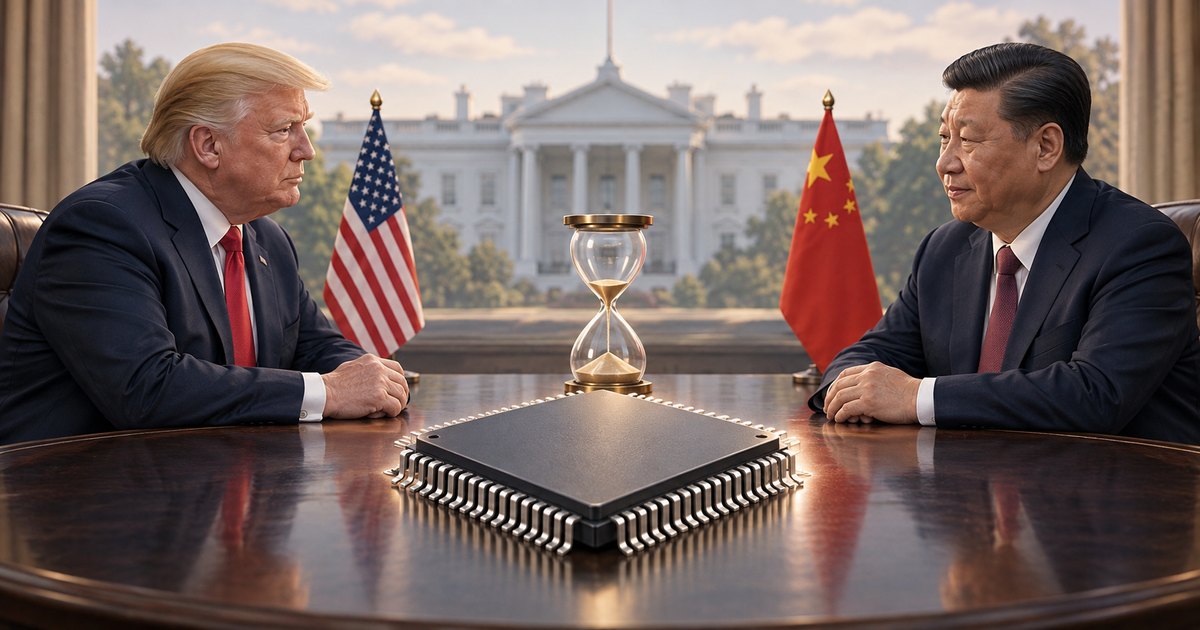
TSMC's $250B US investment shields Taiwan's chip dominance from geopolitical risk

In brief
- $250 billion trade deal set for January 2026 channels TSMC investments into US semiconductor manufacturing
- TSMC allocates $52–$56 billion capital expenditures for 2026, focused on AI chip production
- Taiwan produces 60% of global semiconductors and 90% of world's most advanced chips
- TSMC preserves cutting-edge 2nm production in Taiwan through 2030 while expanding US capacity
- Tariffs on Taiwanese chip imports reduced from 20% to 15% under partnership
The investment framework
A trade deal set for January 2026 will funnel $250 billion in Taiwanese investments into the US semiconductor sector, with $250 billion in credit support from the Taiwanese government backing the commitment. TSMC plans capital expenditures of $52 to $56 billion for 2026 alone, much of it aimed at AI chip manufacturing. The scale underscores Taiwan's bet that deepening ties with the US will stabilize its own position amid rising geopolitical tensions.
TSMC has committed up to $165 billion for its facilities in Arizona, with one fab already operational. Yet the company isn't ceding its crown jewels. The most advanced production lines, including cutting-edge 2nm nodes, stay in Taiwan through at least the end of the decade.
This asymmetry is deliberate.
The geopolitical calculus
Taiwan produces roughly 60% of the world's semiconductors and approximately 90% of the most advanced chips. That concentration makes the island indispensable to global tech and defense infrastructure. The Stimson Center, a Washington-based think tank, recently published analysis arguing that the deepening US-Taiwan partnership in AI chip production directly strengthens the silicon shield.
The logic is straightforward: the more embedded Taiwan becomes in US supply chains, the costlier any military aggression becomes for Beijing. The more indispensable Taiwan becomes to AI supply chains, the higher the cost of any military disruption, and the stronger the deterrent against Chinese aggression, analysts note.
Tariffs on Taiwanese chip imports have already been reduced from 20% to 15%, signaling Washington's commitment to removing friction in the partnership. TSMC keeps its most advanced chip production at home while expanding globally, reinforcing Taiwan's geopolitical leverage in the AI era.