WTO lifts 2026 trade growth forecast to 3.9% as AI hardware drives demand

In brief
- WTO projects 3.9% merchandise trade growth in 2026, up from 1.9% in March.
- WTO's 2027 merchandise trade estimate rose to 4.1% from 2.6%.
- AI-enabling goods made up nearly 47% of merchandise trade growth, with volumes up 67%.
- WTO cut its 2026 services trade forecast to 3.3% from 4.8%.
AI goods account for nearly half of growth
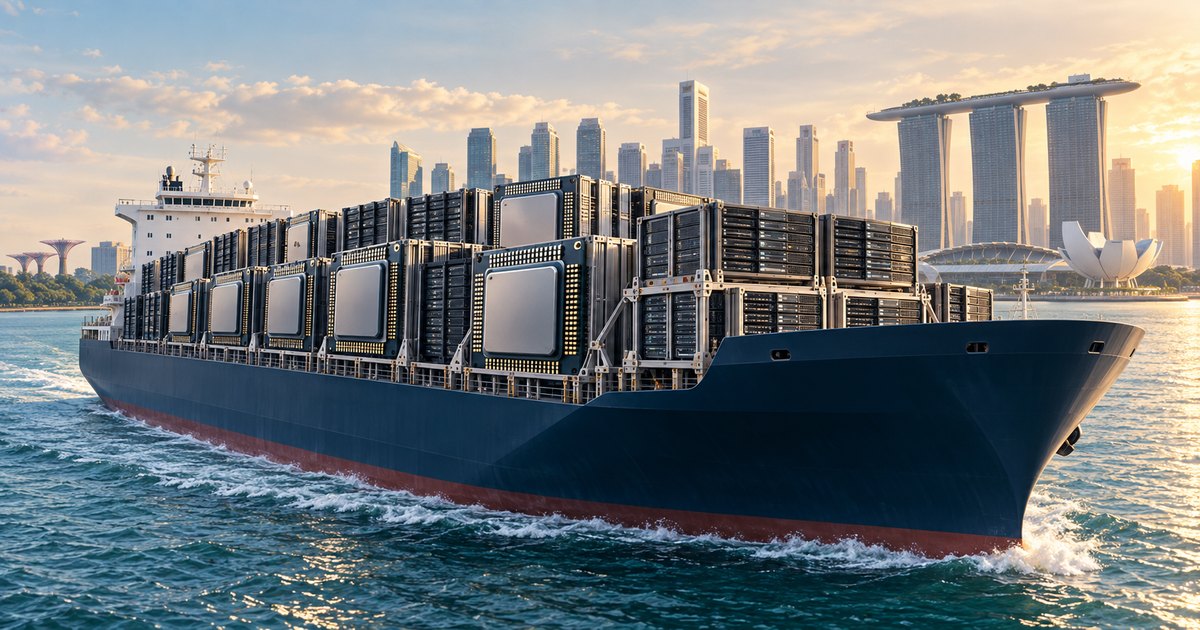
AI-enabling goods accounted for nearly 47% of global merchandise trade growth, per the WTO outlook as reported by Crypto Briefing. Their volumes rose 67% year-on-year.
It's the hardware AI runs on that's carrying the numbers.
Merchandise trade grew 3.5% in the first half of 2026, and AI-related goods drove nearly half of that growth. The report traces much of the projected growth back to heavy investment in AI infrastructure (things like data centers and semiconductor production), which ties the trade outlook closely to how much capital keeps flowing into that buildout.
Services and energy pull the other way
The picture isn't uniform. The WTO cut its 2026 services trade growth forecast to 3.3% from 4.8%, a sharp move in the opposite direction from goods.
The US-Israeli conflict with Iran, which began in February 2026, disrupted energy markets and Persian Gulf shipping routes, Crypto Briefing reported. WTO economists still pointed to the resilience of goods trade, and the report said supply chains adapted to higher fuel and fertilizer costs instead of buckling under them.
Asia is expected to lead merchandise trade expansion. The Middle East, by contrast, faces significant export declines.
The longer view
The WTO projects global GDP growth of 2.6% in 2026 and 2.9% in 2027. Merchandise trade volumes grew 4.2% in 2025, and the projections imply a cumulative increase of more than 12% by 2027 compared with 2024 levels.
Crypto Briefing described that as one of the strongest multi-year trade growth forecasts since before the 2008-2009 global financial crisis (that's the publication's characterisation, not a finding the WTO itself made). Either way, the upgrade rests on one theme, and it's AI infrastructure.
Frequently asked questions
Why did the WTO raise its 2026 trade growth forecast?
The WTO raised its 2026 merchandise trade forecast to 3.9% from 1.9% in March, according to Crypto Briefing's report on the October 8 Global Trade Outlook. Much of the projected growth traces back to heavy investment in AI infrastructure such as data centers and semiconductor production.
How much of global trade growth comes from AI-related goods?
AI-enabling goods accounted for nearly 47% of global merchandise trade growth, and their volumes rose 67% year-on-year. In the first half of 2026, merchandise trade grew 3.5%, with AI-related goods driving nearly half of that growth.
Did the WTO cut any of its forecasts?
Yes. The WTO cut its 2026 services trade growth forecast to 3.3% from 4.8%. The US-Israeli conflict with Iran, which began in February 2026, disrupted energy markets and Persian Gulf shipping routes, and the Middle East faces significant export declines.