Google unveils TPU 8tx for confidential computing and TPU 8i Max for inference
In brief
- Google unveiled the TPU 8tx and TPU 8i Max on November 9, 2026, per Crypto Briefing.
- TPU 8tx targets confidential computing for government agencies and regulated industries.
- Google worked with AMD on hardware-level encryption for the TPU 8tx, Crypto Briefing reported.
- TPU 8i Max is tuned for long-context AI applications, with higher compute density.
What the TPU 8tx adds
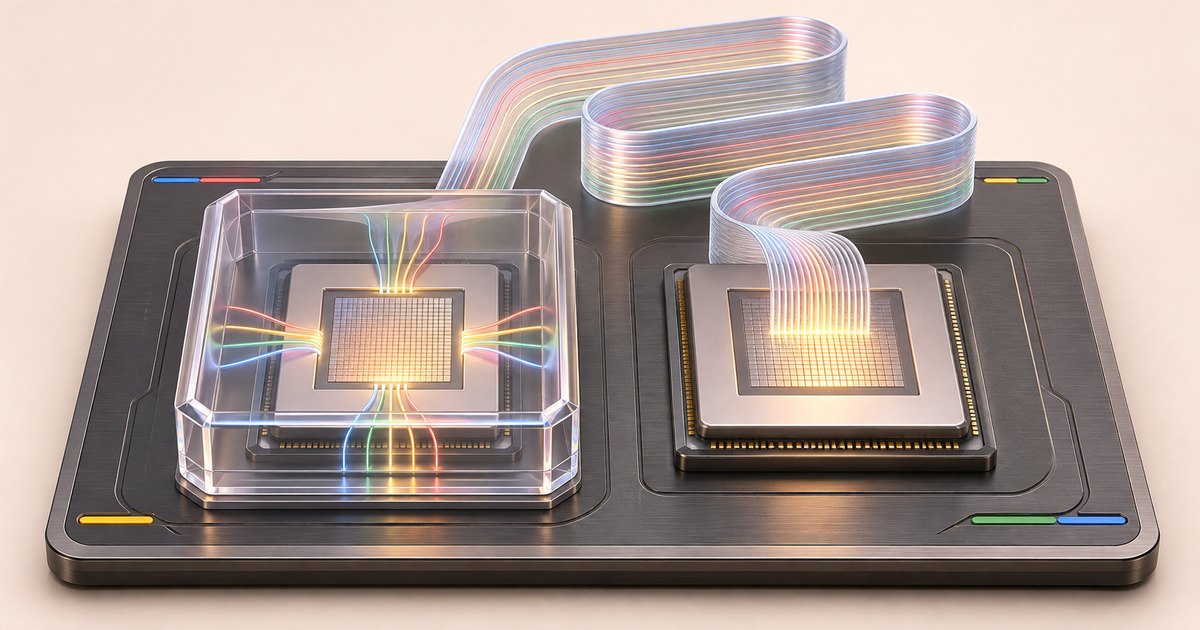
The TPU 8tx is designed for confidential computing workloads, with government agencies and regulated industries as its target customers, Crypto Briefing reported. It's still a training chip at heart. What changes is where the security lives.
On the 8tx, data protection is handled at the chip level itself rather than relying solely on software layers stacked on top. To get there, Google worked with AMD on hardware-level encryption, according to Crypto Briefing's report.
TPU 8i Max and the long-context push
The TPU 8i Max is tuned for AI apps that work with long context windows (models that need to hold a lot of information at once). Google says the Max variant brings increased compute density and improved memory bandwidth, per the outlet.
The base 8i wasn't small to begin with. Its pods scale to 1,152 chips and deliver 11.6 Exaflops, and it carries 384 MB of on-chip SRAM, which Crypto Briefing described as a higher allotment than training chips typically prioritize.
Where the 8t family started
Google announced the base TPU 8t on April 22, 2026, and pitched it as delivering nearly 3x the compute performance per pod of the previous Ironwood generation. A TPU 8t superpod can stretch to 9,600 chips and reach 121 ExaFlops of performance, backed by 2 PB of shared high-bandwidth memory, according to the report.
That's the foundation the 8tx is built on.
Crypto Briefing's own analysis argued that specialized variants could help Google Cloud court enterprise clients that have leaned on Nvidia hardware. The outlet also read the AMD encryption work as a sign that confidential computing is becoming a requirement for winning certain contracts. Both points are the publication's interpretation; they don't come from Google.
Frequently asked questions
What is the Google TPU 8tx designed for?
The TPU 8tx is a reconfiguration of Google's training-focused TPU 8t, built for confidential computing workloads. Crypto Briefing reported that its target customers are government agencies and regulated industries, and that data protection is handled at the chip level rather than relying solely on software layers.
How does the TPU 8i Max differ from the TPU 8i?
The TPU 8i Max is a reconfiguration of the inference-optimized TPU 8i, tuned for AI applications that work with long context windows. Google says the Max variant brings increased compute density and improved memory bandwidth, according to Crypto Briefing.