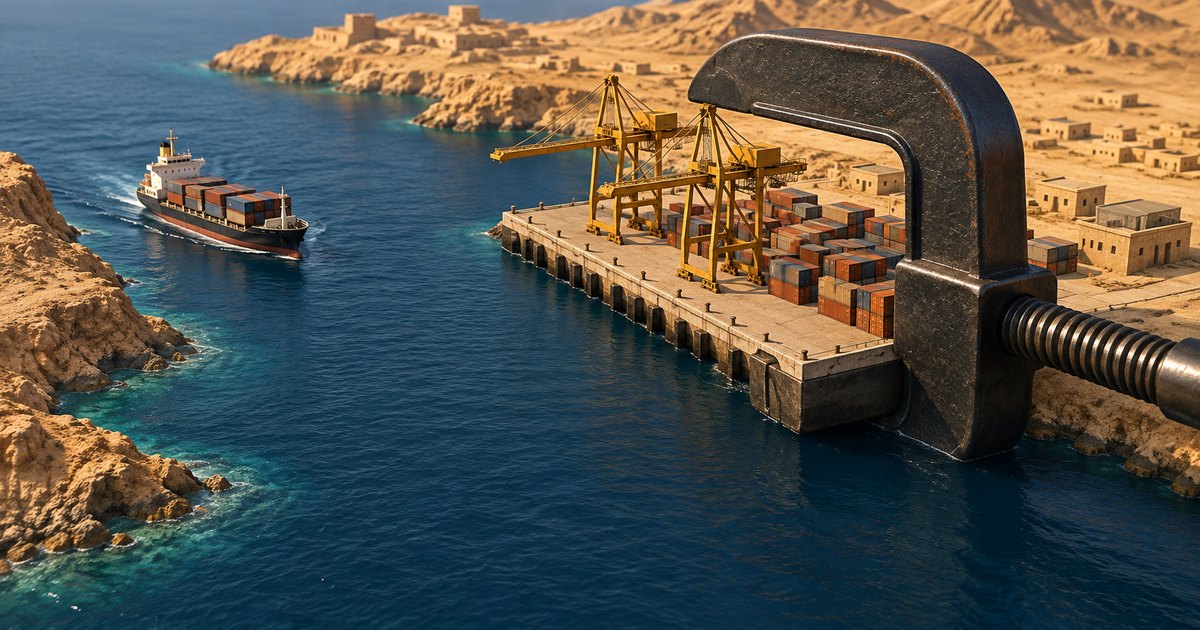
Iran and Oman agree on Strait of Hormuz shipping route

In brief
- Iran and Oman agreed on a proposed shipping route through Strait of Hormuz
- Waterway access has been restricted since February 2026
- Deal aims to manage vessel traffic under controlled conditions
- Full geopolitical resolution among Iran, Oman, US, and Israel remains uncertain
Strategic Shift in Shipping Management
Iran and Oman's agreement points to a controlled approach rather than a complete normalization of shipping activities. The discussions between Tehran and Muscat represent a strategic effort to manage vessel traffic under carefully monitored conditions. This marks a meaningful shift from the near-total restrictions that have defined the waterway since early 2026.
The Strait of Hormuz remains one of the world's most critical energy chokepoints. Roughly one-third of seaborne traded oil passes through its narrow passage. Any disruption to traffic flows cascades across global energy markets and commodity prices. The partial reopening signals both Tehran and Muscat recognize the economic costs of prolonged closure.
Broader Geopolitical Context
The agreement does not yet indicate a full resolution of the broader geopolitical disputes involving Iran, Oman, the United States, and Israel. Observers are monitoring for formal statements from U.S. and Iranian governments that could confirm a broader accord on the strait's status and shipping protocols.
The outcome carries implications beyond regional diplomacy. Energy markets, already volatile, watch closely for signals about sustained access to Middle Eastern crude. Oman's role as a diplomatic intermediary reflects its historical position as a neutral player in regional conflicts. Any expansion of this agreement could reshape how the region manages critical infrastructure during periods of heightened tension.