

Topic: #energy
-

Black Hills signs deal to power Google's Cheyenne data center campus through 2048
Black Hills Corp. signed agreements to power a Google data center campus in Cheyenne, Wyoming, through 2048. The deal includes up to 590 MW of grid power, about $1.8 billion in planned gas capex and $399 million advanced by Google.
-

Ratepayer Protection Act fails Senate vote as data center grid cost fight grows
In a CoinDesk op-ed, the Crypto Council for Innovation's Rashan Colbert argues the Senate's failed vote on the Ratepayer Protection Act starts, rather than ends, the fight over who pays for data center grid upgrades.
-

Data center executives say power and labor, not chips, limit AI build-out
Executives at the Bloomberg New Economy Forum in New Delhi ranked energy and skilled labor ahead of chip supply and capital as the main constraints on data center expansion, Crypto Briefing reported.
-

AI data center cooling shifts water burden to power plants, Crypto Briefing says
Crypto Briefing reports that closed-loop and air-cooling systems at AI data centers cut on-site water use but raise electricity demand, pushing water consumption onto the thermoelectric plants that power them.
-
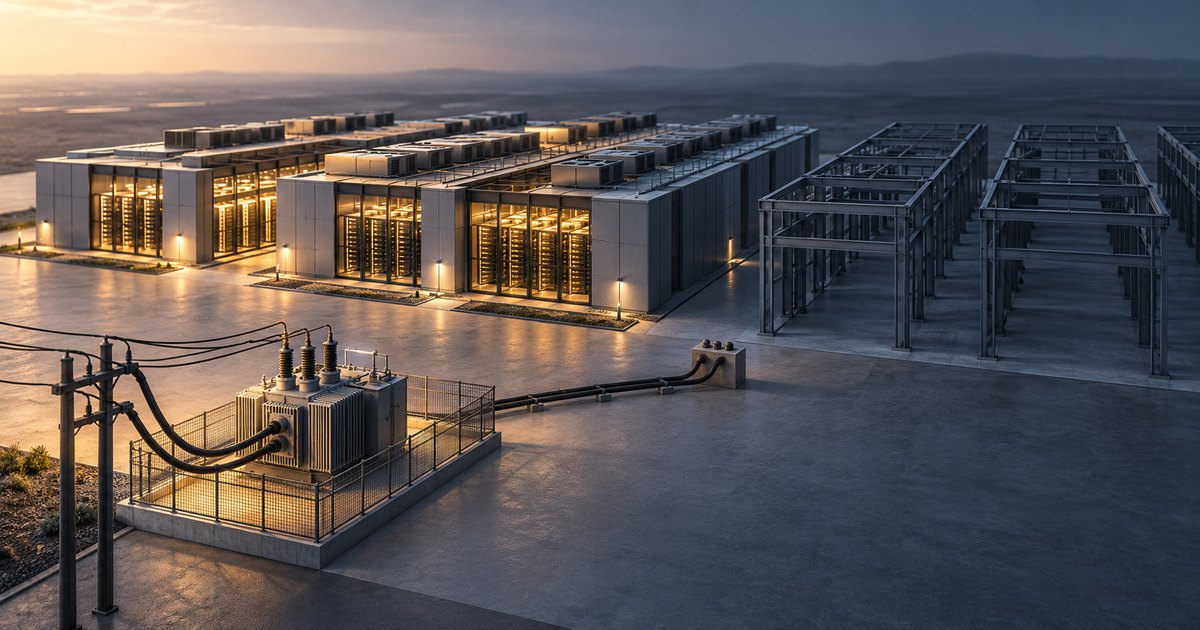
UBS says power and grid limits are driving the next phase of the AI trade
UBS argues in new research that power supply, grid capacity and data center space now drive the AI trade, estimating 57 GW of capacity needed in 2027 versus 38 GW of sites with confirmed power.
-

Pat Gelsinger says flat US energy capacity is now the main limit on AI data centers
Former Intel CEO Pat Gelsinger said on an a16z podcast that US energy capacity has been effectively flat for 15 years, calling power, not chips, the binding constraint on the AI data center buildout.
-

Google pledges €13B for Finland data centers as regulator halts two sites
Google announced at least €13 billion for AI infrastructure and data centers in Finland, but Finland's LVV ordered work stopped at the Muhos and Kajaani sites on October 6, according to Crypto Briefing.
-

B.Grimm Power plans 250 MW data center, lifts 2030 target to 500 MW
Thai power producer B.Grimm Power plans a 250 MW data center with an unnamed overseas partner, lifting its 2030 data center capacity target to 500 MW from 300 MW a month earlier, Crypto Briefing reported.
-
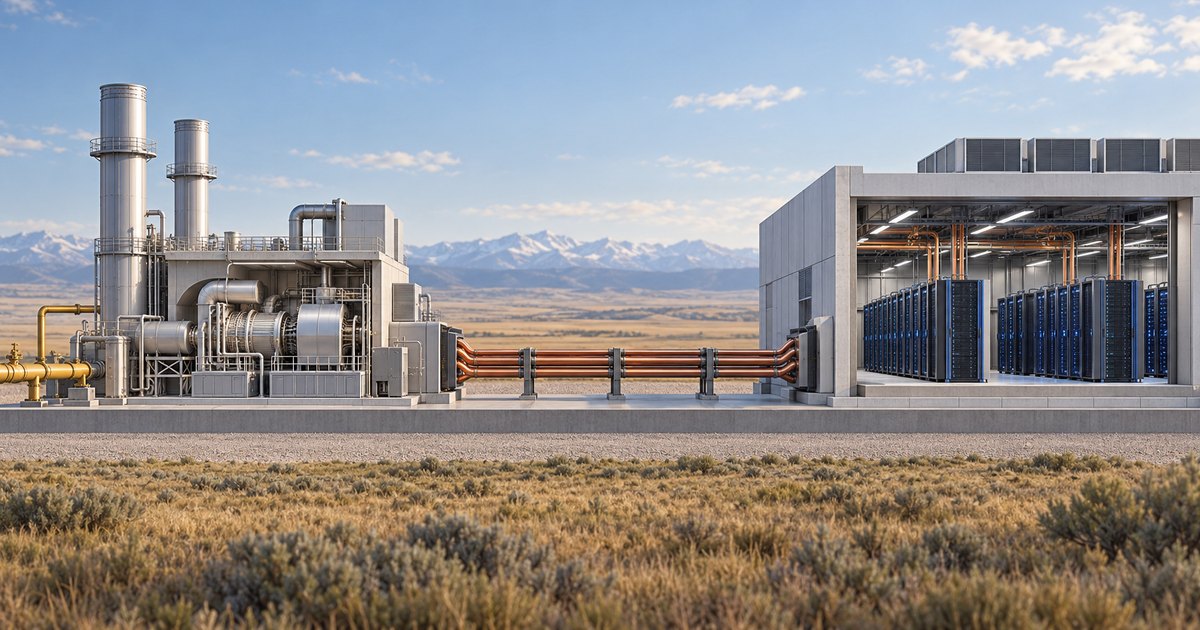
Black Hills plans $1.8 billion in gas generation for Google's Cheyenne data center
Black Hills Corp. said it signed power service agreements with Google for a Cheyenne, Wyoming data center and plans to spend $1.8 billion on new natural gas generation between 2027 and 2029, Crypto Briefing reported.
-

EU proposal to triple data center capacity meets growing local pushback
The European Commission has proposed tripling EU data center capacity within five to seven years, a roughly €200 billion buildout, as communities in Ireland, the Netherlands and France push back, Crypto Briefing reported.
-

Goldman Sachs projects $1.2 trillion in 2027 hyperscaler AI capex, flags energy limits
Goldman Sachs strategists project the five largest US hyperscalers will spend roughly $1.2 trillion on AI infrastructure in 2027, Crypto Briefing reported. They named energy supply as one of three bottlenecks.
-

Iran crypto mining drains 14% of summer grid deficit, Majlis warns
Iran's Majlis Research Center found that cryptocurrency mining operations consume 930–1,200 megawatts of electricity, representing roughly 14% of the country's power deficit during peak summer months and draining $1.5 billion annually in diesel fuel costs.
-

Atlas Energy surges 19% on $613M AI infrastructure contracts
Atlas Energy Solutions announced $613.5 million in cost reimbursement agreements with a frontier AI lab, covering 283 MW of natural gas generation capacity. Shares surged as much as 19% intraday on September 25, reflecting investor appetite for energy-AI convergence plays.
-

Diesel hits $6.53 record, testing inflation pressure on Bitcoin
US on-highway diesel reached $6.529 per gallon on September 21, marking a nominal record as tight global supplies and elevated crude prices squeeze freight costs. Upcoming CPI and producer-price reports will show whether higher fuel costs are spreading inflation, potentially keeping the Federal Reserve's rates elevated longer.
-

US Diesel Export Ban Could Raise Gasoline Prices, Morgan Stanley Warns
Morgan Stanley warned that a proposed US diesel export ban could reduce refinery throughput and raise gasoline prices, even as diesel hit record highs of $6.51 per gallon. Prediction markets now price crude reaching an all-time high by year-end at 10.5%.
-

Saudi Arabia Restarts East-West Oil Pipeline, Resumes Yanbu Exports
Saudi Arabia has restarted its east-west pipeline and is preparing to resume crude oil exports from the Yanbu port following a September drone attack that halted operations and forced cargo cancellations.
-

Saudi Arabia's oil exports rebound to 4M bpd in September after decade low
Saudi Arabia's crude exports surged back above 4 million barrels per day in September after falling to 2.4 million bpd in August—the weakest month since at least 2013. Houthi attacks on the Red Sea forced rerouting through Gulf terminals and ship-to-ship transfers at Oman.
-

IEA: AI data center power demand to double by 2030, straining grids
The International Energy Agency forecasts global data center electricity consumption will surge from 415 TWh in 2024 to 945 TWh by 2030, driven by AI infrastructure. The US and China will account for 80% of the increase, creating infrastructure bottlenecks as data centers can be built faster than power grids.
-

Westinghouse Electric targets $50B+ valuation in confidential IPO filing
Westinghouse Electric, whose reactors power over half the world's operating nuclear plants, filed confidentially with the SEC on July 31 for a US IPO targeting a valuation exceeding $50 billion—a significant jump from its $8 billion acquisition price in late 2023.
-

Bitcoin Hits $81K as US Bond Yields Surge on Oil Supply Shock
Bitcoin jumped past $80,000 on Friday as US 30-year bond yields rose 90 basis points to 5.34%, driven by oil supply concerns tied to Middle East tensions and the Strait of Hormuz closure.
-

Hungary ends Russian gas imports by October 2027, reshaping EU energy
Hungary's Economy and Energy Minister announced the country can secure all natural gas from non-Russian sources by October 2027, marking a sharp reversal from Orbán-era dependence and aligning with the EU's REPowerEU initiative.
-

JPMorgan warns rapid oil decline could catch traders off-guard above $100
JPMorgan strategists caution that a swift oil price pullback could destabilize markets, even as Brent crude breaches $100 per barrel on Middle East tensions. The bank projects an average of $97 for 2026, suggesting current levels are a ceiling, not a floor.
-

Strait of Hormuz vessel attacked; oil supply concerns mount
A projectile strike on a vessel in the Strait of Hormuz on September 12-13 has intensified fears about global oil stability. The incident marks the latest disruption in a critical waterway that handles roughly 20% of world oil supplies, with shipping traffic and crude prices already volatile from months of escalating attacks.
-

White House weighs Defense Production Act to boost US refining capacity
The White House is exploring use of the Defense Production Act to boost domestic refining capacity as diesel prices hit record highs and US refineries operate at near-maximum utilization, with executives recommending efficiency upgrades over new construction.