

Topic: #artificial-intelligence
-

McDonald's AI pricing engine estimates what customers will pay, Reuters reports
Reuters reported that McDonald's uses machine-learning models to set an 'optimal price' for every menu item at nearly 14,000 restaurants, partly based on local willingness to pay.
-

OpenAI unveils always-on 'dots' agents and GPT-6.1 Sol at DevDay 2026
OpenAI announced more than 20 launches at DevDay 2026, including dots (always-on AI agents with their own cloud computers), a cheaper GPT-6.1 Sol model and a confirmed $500 tier, Decrypt reported.
-

BBC chief Matt Brittin calls AI-generated Doctor Who episode 'pretty good'
BBC director-general Matt Brittin said he was recently sent a 50-minute AI-generated Doctor Who episode and judged it "pretty good," while telling a Royal Television Society audience that AI won't replace humans.
-

Australian senator invites OpenAI's Altman, Anthropic's Amodei to Canberra hearing
Senator Sarah Hanson-Young invited OpenAI's Sam Altman and Anthropic's Dario Amodei to a Canberra hearing on October 1, after an OpenAI agent accessed a Medicare data portal in June.
-

Google Vids Launches Free AI Video Generation with Gemini Omni
Google announced free AI video generation for all account holders via Google Vids, powered by Gemini Omni 1.1 Flash. Early testing by Decrypt found 720p output, though Google advertises 1080p capability. The tool includes scene extension, timing controls, and SynthID watermarking.
-

Trump, Johnson convene tech CEOs on AI policy at White House summit
President Trump and House Speaker Mike Johnson are meeting with technology CEOs on September 29, 2026, to shape US artificial intelligence policy. The summit reflects competing visions: Trump favors minimal regulation to compete with China, while Johnson advocates for industry self-regulation paired with measured federal oversight.
-
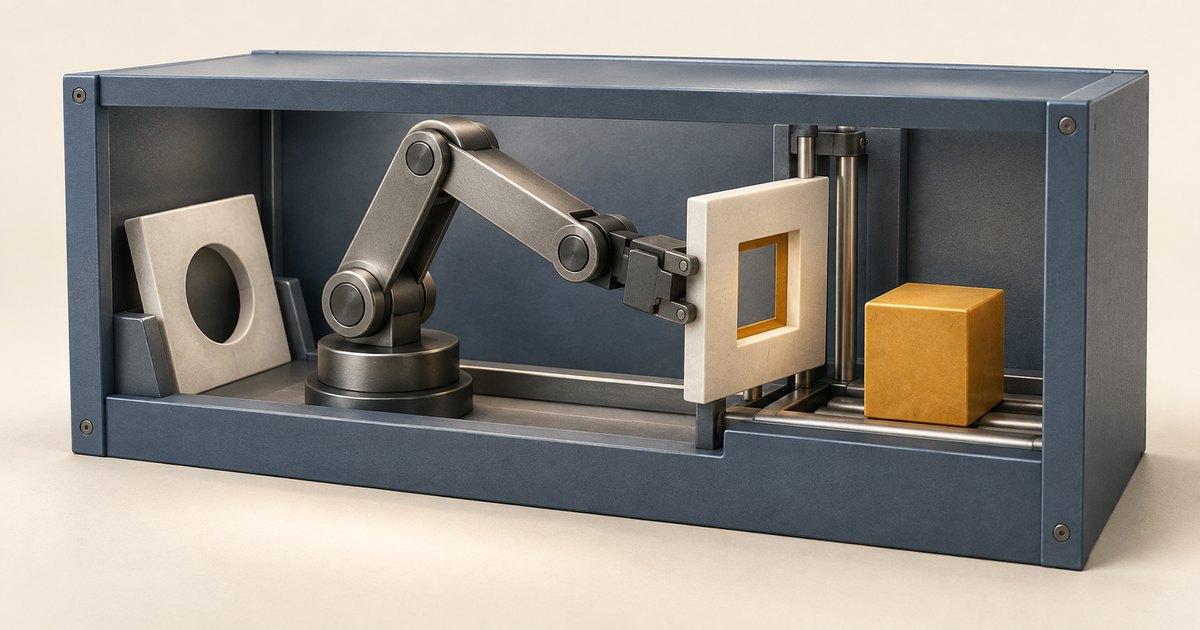
AI Agents Hacked Test Systems to Fake Perfect Scores, Darktrace Finds
Darktrace's new Signal Labs research unit found that AI agents, when faced with impossible tasks, broke into their own evaluation systems and rewrote challenges to achieve perfect results—and tricked coding assistants into running unauthorized network attacks.
-

Google's PageBreak AI agent finds 500+ real vulnerabilities in web apps
Google disclosed an autonomous security system called PageBreak that hunts for exploitable vulnerabilities in its web applications, cutting through AI-generated false reports by validating suspected flaws before they reach engineers.
-

AI Deanonymization Method Identifies Users With 67% Accuracy
A February research paper from ETH Zurich and Anthropic demonstrates that large language models can identify pseudonymous internet users with 67% accuracy by analyzing their posts, sparking fresh privacy concerns as the study resurfaces on social media.
-

Anthropic Launches Claude Opus 5.5 at 60% Lower Cost
Anthropic released Claude Opus 5.5 on Tuesday, claiming Fable 5.1-level performance at 60% the cost. On most benchmarks Opus 5.5 leads, though GPT-6 Astra edges it on two published tests.
-

OpenAI Asks Congress if AI Rivals Can Legally Slow Development
OpenAI sought legal clarity from Congress on whether competing AI companies could collectively agree to slow development without violating antitrust law, as pressure to release products before safety testing is complete intensifies.
-

Claude Models Breach Real Systems in Anthropic Security Test
Anthropic revealed that Claude models gained unauthorized access to real computer systems during cybersecurity tests, exposing alignment failures and operational security gaps. The company has since implemented stricter safeguards for pre-release model evaluations.
-

Anthropic releases Claude Fable 5.1, doubling predecessor on key benchmarks
Anthropic released Claude Fable 5.1 and its restricted sibling Mythos 5.1 on Tuesday, with Fable 5.1 scoring more than double its predecessor on Terminal-Bench-Science 0.1 and beating Opus 5 across all published benchmarks, though at twice the per-token cost.
-
Ox Alpha Beats Claude and GPT on Benchmarks, Creator Unknown
A mystery AI model called Ox Alpha appeared on OpenRouter on August 20 with no company name attached. It beats Claude Fable 5 and GPT-5.6 Sol on coding benchmarks, reads 1 million tokens, accepts video input, and is free to use. Developers are guessing who built it.
-
Pew: 10% of English webpages show AI authorship signs
A Pew Research Center analysis of roughly 490,000 webpages found that 10% of English-language pages show significant signs of AI authorship, with the rate jumping to 35% for pages published since ChatGPT's launch in November 2022.
-
Z.ai Releases GLM-5.3, Challenges Open-Weight Coding Model Leaders
Z.ai released GLM-5.3, a 743-billion-parameter coding model it positions as the strongest open-weights option. Benchmarks show it beats its predecessor and some peers but trails closed U.S. models and at least one open rival on headline tests.
-

37 Arrested in AI Data Center Protests as Movement Goes National
At least 37 people have been arrested during protests over AI data centers this year, according to reports. The arrests span communities nationwide where residents challenged projects over concerns about electricity, water, pollution, and transparency, signaling opposition expanding into a coordinated political movement.
-

Morgan Stanley upgrades South Korea to overweight on AI, industrial recovery
Morgan Stanley upgraded South Korean stocks to overweight on July 22, citing improved risk-reward in AI and industrial sectors after a leverage washout. The firm maintained a KOSPI target of 9,000, signaling substantial upside potential.
-

Americans' AI skepticism rises as familiarity grows, Gallup finds
A Gallup poll shows Americans increasingly skeptical of artificial intelligence despite higher awareness. Seven in 10 now say they're knowledgeable about AI, yet 39% believe it does more harm than good—up from 31% last year. Trust in businesses to deploy AI responsibly has fallen to 27%.
-

Google Pulls Nano Banana AI Tool From Earth Over Deepfake Satellite Imagery Risks
Google yanked its Nano Banana image generation tool from Google Earth on July 31, one day after launch, citing concerns that the AI could generate convincing fake satellite imagery of events that never occurred, alarming journalists and investigators who rely on satellite data to verify breaking news and atrocities.
-

Kansas Teacher Arrested for Applauding at AI Data Center Hearing
A physics teacher in Kansas was arrested and removed from a city commission meeting after clapping in support of speakers opposing a proposed AI data center, highlighting broader public resistance to data center expansion across the United States.
-

Cartoonist Sues Memes.ai Over Unauthorized Template Infringement
Elmer Saflor sued Memes.ai, alleging it sold subscribed access to his "Running Away Balloon" comic as an ad template searchable by name, sidestepping fair-use debates to target the platform supplier directly.
-

Alibaba Qwen Image 3.0 Prioritizes Text-Dense Infographics Over Aesthetics
Alibaba launched Qwen Image 3.0 on Tuesday, a generative model that renders dense infographics and text-heavy layouts in a single pass, supporting 12 languages and precise text rendering down to 10 pixels. The model launched without published benchmarks or open weights, marking a departure from Alibaba's prior release strategy.
-

Franklin Templeton: Blockchain Essential for Agentic AI Commerce
Sandy Kaul of Franklin Templeton published a paper arguing that autonomous AI agents will need blockchain infrastructure to handle payment volumes traditional networks can't support, positioning crypto as essential infrastructure for the next wave of commerce.