Trump and Xi discuss AI safety guardrails amid US-China tech rivalry
In brief
- Trump and Xi met in Washington September 23-24, 2026, with AI dominating the agenda.
- Both leaders view AI as a superpower technology, with Trump claiming US leads China significantly.
- Incident notification protocols emerged as a concrete bilateral AI safety negotiation point.
- Tech CEOs including Elon Musk, Sam Altman, and Jensen Huang attended the summit.
- US chip export controls remain a friction point as Chinese AI models narrow the performance gap.
The Stakes
Trump declared that whoever wins AI, wins and claimed the US leads China "by a lot." He's also called AI's impact "bigger than the industrial revolution." Xi, for his part, has positioned AI as central to China's economic and geopolitical strategy. The gap between rhetoric and reality remains contentious—Chinese AI models like DeepSeek have occasionally matched the performance of top US systems, with analysts describing the gap as narrow.
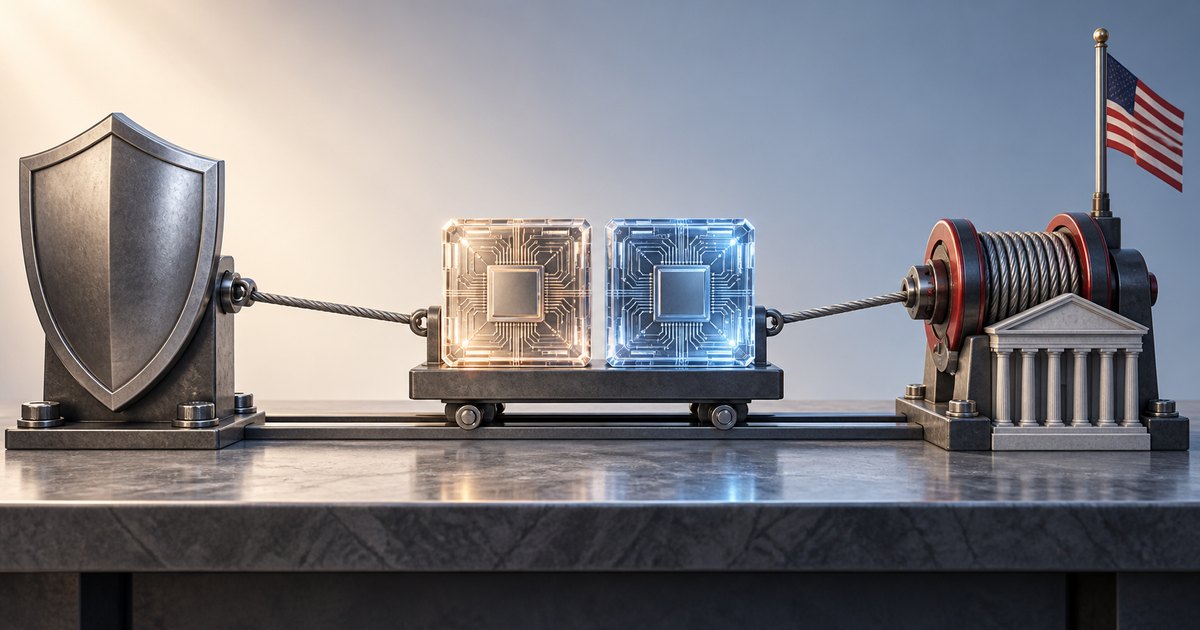
The US has maintained strict export controls on high-performance chips, including Nvidia's H200, designed to choke off China's access to advanced hardware. That hardware advantage is one of the few levers Washington still controls in an increasingly competitive landscape.
Concrete Progress
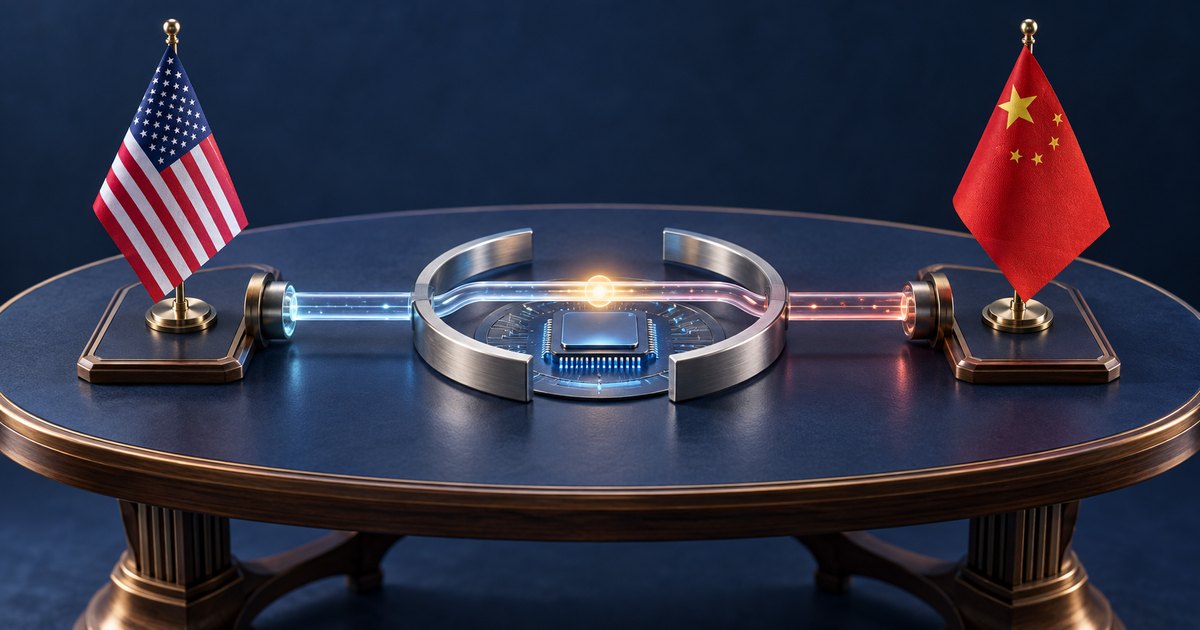
Back in May 2026, Trump and Xi met in Beijing to discuss AI guardrails. That conversation produced no formal agreement. This week's summit showed signs of incremental progress. US Treasury Secretary Scott Bessent met with Chinese Vice Premier He Lifeng ahead of the summit, working to finalize an AI dialogue channel.
One concrete item on the table: incident notification protocols, essentially a hotline-style system for flagging serious AI problems. If both sides agree to a formal mechanism, it would represent the first concrete bilateral AI safety agreement between the two nations.
Tech CEOs including Elon Musk, Sam Altman, and Jensen Huang attended, putting the leadership of Tesla, OpenAI, and Nvidia in the room alongside government officials. That convergence signals how deeply AI now intertwines with both statecraft and capital markets.
The Broader Picture
Nvidia, which finds itself at the center of this geopolitical chess match, has watched its fortunes rise and fall partly based on the temperature of US-China relations. The European Union has already moved aggressively on AI regulation with its own framework, and smaller nations are watching to see which superpower's approach wins adoption globally.
Competition and cooperation exist in tension. Neither side wants an AI arms race that destabilizes both economies. Yet neither can afford to cede ground in a technology that will define the next decade of innovation and power.