Xi Jinping assembles business delegation for Washington visit, targeting tariff relief
In brief
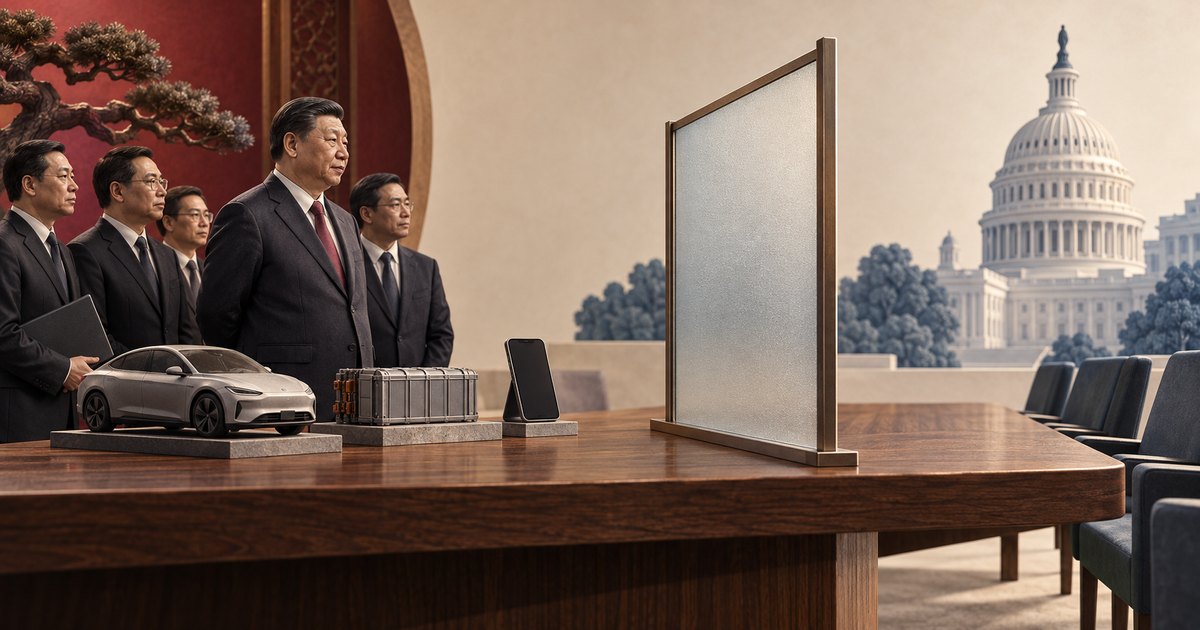
- Xi Jinping assembles Chinese business delegation for September 24 Washington state visit, mirroring Trump's May 2026 Beijing CEO trip
- Delegation includes BYD, CATL, Xiaomi, Gotion, Hisense, Wanxiang Group, Bank of China, and potential optical supplier Zhongji Innolight
- Chinese EV and battery makers seek tariff relief amid 100% US tariffs and regulatory scrutiny
- Selection criteria include Communist Party loyalty, deal potential, and careful calibration to avoid overshadowing Xi
- Bank of China participation signals financial sector engagement on capital flows and currency coordination
Sanctioned giants meet Washington
The delegation reportedly also includes executives from Gotion, Hisense, Wanxiang Group, and Bank of China, with Zhongji Innolight, a major optical communications supplier, potentially added to the list. Each company carries its own regulatory baggage in the US market.
BYD, the world's largest electric vehicle maker by volume, was added to the Pentagon's list of Chinese military companies in June 2026. CATL, the dominant global battery manufacturer, has faced scrutiny over alleged ties to forced labor in Xinjiang, though the company has denied those claims. Xiaomi was briefly placed on a Pentagon blacklist in 2021 before successfully fighting the designation in court.
Yet Chinese electric vehicles broadly face 100% tariffs in the US, a barrier so steep it essentially functions as a market ban. The delegation's presence signals Beijing's intent to negotiate relief.
Market leverage and supply chains
The timing mirrors Trump's own playbook. Trump brought a group of American CEOs including Elon Musk and Tim Cook to Beijing in May 2026. That trip produced a series of memorandums of understanding and investment pledges.
BYD and CATL sit at the center of global battery and EV supply chains that touch every major automaker from Volkswagen to Ford. Any shift in US tariff policy toward these firms ripples across global automotive and energy markets. Bank of China's inclusion in the delegation suggests conversations may extend beyond goods and tariffs into capital flows, investment frameworks, and potentially currency coordination.
Selection and fluidity
The final lineup remains fluid. Invitations and US visa approvals are expected to be issued shortly before the visit. Selection criteria for the delegation reportedly go beyond pure commercial logic—loyalty to the Communist Party, the potential for actual US business deals, and careful calibration to ensure no executive overshadows Xi.
The visit marks Xi's first significant business-oriented trip to the US since 2015. It's a deliberate reset, not a spontaneous gesture.
Frequently asked questions
Why are BYD and CATL facing US regulatory pressure?
BYD was added to the Pentagon's military companies list in June 2026. CATL has faced scrutiny over alleged ties to forced labor in Xinjiang, though it denies the claims. Both face steep US tariffs as a result.
What do 100% US tariffs on Chinese EVs actually mean for the market?
The tariff is so high it essentially functions as a market ban, locking Chinese automakers out of the US entirely. Even a signal that Washington might consider phased reduction could shift global supply chains significantly.
How does this delegation compare to Trump's Beijing trip?
Trump brought American CEOs including Elon Musk and Tim Cook to Beijing in May 2026, which produced memorandums of understanding and investment pledges. Xi's Washington delegation mirrors that playbook, signaling a reciprocal business-focused engagement.