Xi Jinping visits India to reset China-India ties after 2020 clash
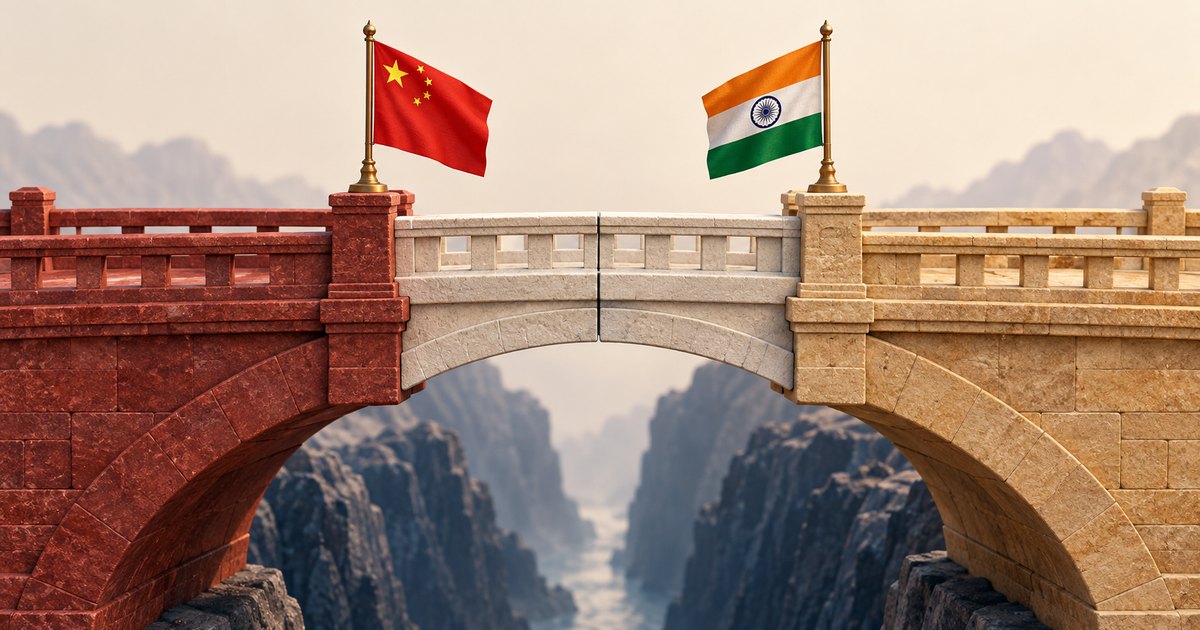
In brief
- Xi Jinping arrived in New Delhi on September 12, first India visit since October 2019
- Leaders met at 18th BRICS Summit to discuss border management and bilateral trade expansion
- India-China trade reached $155 billion in 2025, with India holding $112 billion deficit
- Military talks focused on LAC patrol protocols and de-escalation procedures
Resetting after five years of tension
Chinese and Indian troops clashed in the Galwan Valley in June 2020, a confrontation that killed soldiers on both sides and froze relations between the world's two most populous nations. Xi's return to India signals an attempt to thaw that freeze.
The two leaders had met twice before this visit. Modi and Xi met on the sidelines of the BRICS summit in Kazan in October 2024, and again in Tianjin on August 31, 2025. This September summit in India represents a deepening of engagement.
Just days before Xi's arrival, a military meeting between India and China took place on September 6-7, focused on patrol protocols, buffer zones, and de-escalation procedures along the Line of Actual Control (LAC). These talks set the stage for the broader diplomatic reset.
Trade imbalances and structural friction
In 2025, bilateral goods trade between the two countries reached approximately $155 billion. Yet the relationship remains asymmetrical. India ran a trade deficit with China of roughly $112 billion, a gap that reflects deeper structural differences.
China exports high-value manufactured goods, electronics, and industrial inputs to India. India's exports to China remain concentrated in lower-value commodities and raw materials. Modi's government has tried to address this through selective tariffs and restrictions on Chinese apps and investments since the Galwan clash.
The summit agenda focused on practical steps. The talks covered border management along the LAC, trade facilitation mechanisms, and the resumption of people-to-people exchanges. Both sides pointed to the renewal of direct flights between Indian and Chinese cities and the resumption of pilgrimages.
Managed rivalry as doctrine
Xi emphasized that effective cooperation across multiple fields would allow both nations to position themselves as development partners rather than competitors. Both India and China have championed the concept of multipolarity — a worldview that aligns their strategic interests even as competition persists.
"What both leaders appear to be pursuing is a managed rivalry, one where competition continues but within guardrails that prevent another Galwan."
This framing offers a path forward. Rather than resolve their differences entirely, Modi and Xi are building institutional mechanisms to contain escalation. Military hotlines, joint working groups on trade, and renewed cultural ties create friction-reduction surfaces. The goal isn't friendship. It's preventing the next clash.