IEA: AI data center power demand to double by 2030, straining grids
In brief
- IEA projects data center power demand to more than double to 945 TWh by 2030, nearly 3% of global electricity
- US data center load expected to jump 130% by 2030, consuming nearly half of all projected US electricity growth
- Data centers take 18-24 months to build; power infrastructure requires 5-10 years, creating grid stress
- Renewable energy projected to meet 50% of incremental demand; natural gas and coal to cover over 40%
- Bitcoin miners pivoting to AI hosting due to more stable economics than crypto mining
The scale of demand
The projected 945 TWh of data center electricity consumption by 2030 would represent nearly 3% of all global electricity demand, up from a much smaller slice today. To contextualize: that's close to the entire annual electricity consumption of France and Germany combined.
Data center electricity use has been growing at about 12% annually since 2019, with the IEA expecting that pace to accelerate to roughly 15% per year through the end of the decade. The acceleration is driven by AI workloads and the computational demands of training and inference at scale.
Geographic concentration matters. The United States and China alone are forecast to account for nearly 80% of the total increase in data center electricity demand by 2030. The US alone will shoulder most of the burden: the country is expected to add approximately 240 TWh of data center load by 2030, a 130% jump from 2024 levels. That single increase would represent nearly half of all projected growth in total US electricity demand over the same period.
The infrastructure mismatch
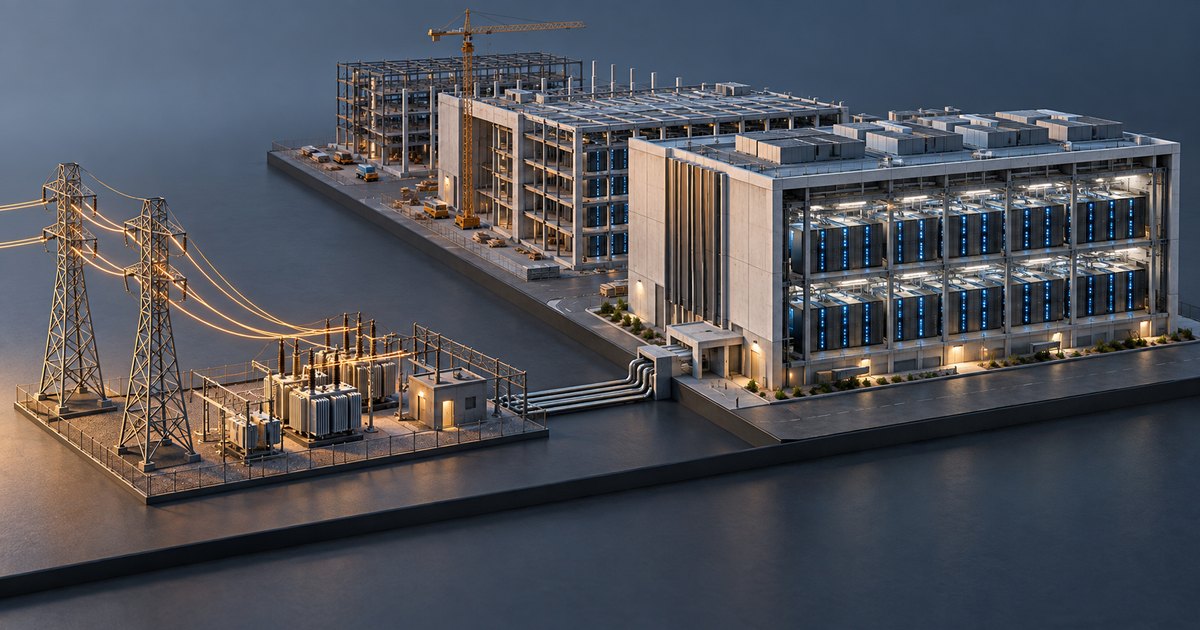
Here's the crux: data centers can be built in 18 to 24 months. New transmission lines and generation capacity often take five to ten years to permit and construct. That mismatch is creating real stress on existing grids, particularly in regions like Northern Virginia, central Texas, and parts of the US Southeast where data center clusters are already straining local power systems.
The energy mix will shift. The IEA expects renewable energy to meet about 50% of the incremental data center demand by 2030. Natural gas and coal together are projected to cover more than 40% in the near term, with nuclear filling in depending on deployment timelines.
Spillover effects
If data centers consume an increasingly large share of new power capacity, other electricity-intensive industries could face crowding-out effects. Manufacturing, electrification of transport, and industrial processes all depend on grid capacity.
This dynamic has already triggered shifts in adjacent sectors. Bitcoin mining operations, which compete for many of the same resources, including cheap power, grid interconnection, and favorable regulatory environments, are repositioning. Several publicly traded Bitcoin miners have already begun pivoting toward AI hosting and high-performance computing, given more predictable economics compared to mining returns tied to volatile crypto prices. Companies like Core Scientific and Hut 8 have made this transition a central part of their corporate strategy, leveraging existing power contracts and data center shells to serve AI workloads.
The IEA's forecast underscores a hard constraint: electricity infrastructure can't keep pace with AI buildout. Grid operators, regulators, and utilities face years of accelerated development. Without it, regional brownouts and data center clustering in only the most power-rich geographies become inevitable.