

AI × Crypto
AI × Crypto is the most underserved category in mainstream crypto news. LeoDex News covers the intersection: AI agents settling payments on blockchain rails (Keyrock's $73M data shows this is no longer theoretical), autonomous DeFi protocols, AI infrastructure spend by mining-adjacent companies (IREN, CoreScientific, Galaxy), and the data-economics question of what AI training corpora are worth on-chain.
The most interesting stories aren't "AI token rallies 40%" — they're "what is actually happening when a billion AI-agent transactions cross a stablecoin payment rail." We cover the mechanism, the players, and the regulatory questions raised when autonomous software agents become economic actors. Stablecoins are quietly becoming the default settlement layer for the agent economy; we're tracking it as it happens.
Latest in AI × Crypto
-

China proposes export controls on AI model weights, agents and computing clusters
China's commerce and science ministries proposed adding advanced AI, including model weights and source code, to the export-control list, according to Bloomberg. Public consultation on the draft runs until November 15, 2026.
-

BlackRock's Fink says a U.S. data center moratorium would trigger a recession
BlackRock CEO Larry Fink told CNBC that halting U.S. data center buildouts would put the country in a recession. He also warned that a $40 trillion national debt is driving up demand for credit.
-

Nvidia backs four French AI startups as Huang meets Macron, report says
Nvidia CEO Jensen Huang met French President Emmanuel Macron at the Élysée Palace on October 13, and Nvidia disclosed minority stakes in four French AI startups, Crypto Briefing reported.
-

Nvidia takes minority stakes in four French AI startups, including Doctolib
Nvidia took minority stakes in Genesis AI, Pigment, Entalpic and Doctolib, Crypto Briefing reported, with CEO Jensen Huang announcing the deals in Paris. Financial terms, stake sizes and valuations weren't disclosed.
-
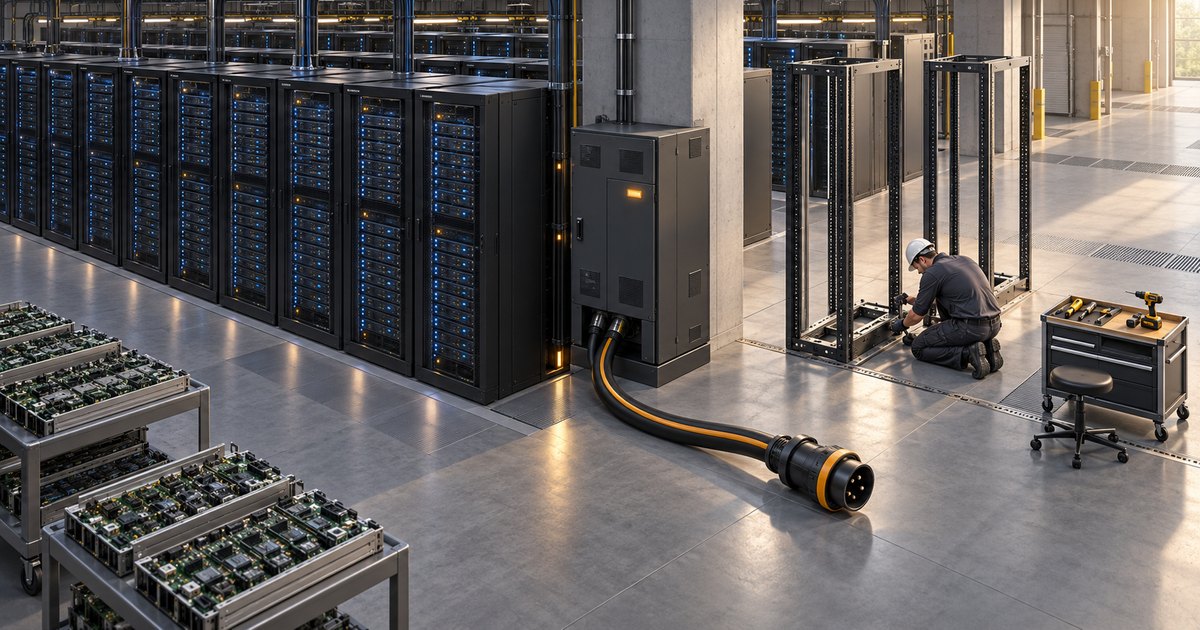
Data center executives say power and labor, not chips, limit AI build-out
Executives at the Bloomberg New Economy Forum in New Delhi ranked energy and skilled labor ahead of chip supply and capital as the main constraints on data center expansion, Crypto Briefing reported.
-

Goldman Sachs' Privorotsky calls AI stock selloff a rotation, not a liquidation
Goldman Sachs' Rich Privorotsky said the AI stock unwind looks like investors moving money inside the AI trade rather than leaving it, as memory chipmakers led the decline, Crypto Briefing reported.
-

Workday partners with Anthropic, launches beta connector linking Sana AI agents to Claude
Workday announced a partnership with Anthropic at Workday Rising on October 13, 2026, unveiling a beta Sana connector that lets employees run HR and finance tasks through Claude.
-

Broadcom CEO's 'casino gamblers' remark linked to Asian chip stock slide
Crypto Briefing linked a tech stock decline to Broadcom CEO Hock Tan calling some AI investors "casino gamblers," citing a 6.2% Kospi drop and weaker prediction-market odds on a $600 billion Anthropic valuation.
-

Alibaba releases N1 Pro smart glasses with eye tracking and iris payments
Alibaba released its N1 Pro smart glasses on October 13, 2026, adding eye tracking and iris payments to a Qwen-powered wearables line that began as the Quark AI Glasses, according to Crypto Briefing.
-

Jump Trading hires Itô founders to run new AI compute trading desk
Itô's entire founding team is joining Jump Trading to launch a desk that trades access to AI computing power, co-founder Affaan said on October 12, according to Crypto Briefing.
-

IMF's Vamvakidis warns an AI market correction could spill into the real economy
IMF official Athanasios Vamvakidis warned an AI market correction could hit the real economy depending on its severity, Crypto Briefing reported, citing an IMF outlook tying a moderate correction to a 0.4% cut in 2026 global output.
-

KB Kookmin Card and SBI Holdings reportedly plan AI identity checks, crypto payments
South Korea's KB Kookmin Card and Japan's SBI Holdings reportedly plan to test AI-powered identity verification and explore crypto payments for Japanese tourists, though neither has formally detailed the arrangement.
-

Fortune predicts AI agents will reshape crypto markets by 2028, Crypto Briefing says
Crypto Briefing, citing a Fortune report, said AI agents were expected to fundamentally reshape crypto market activity by 2028 and outpace human participants, with platforms like Hyperliquid drawing attention.
-

Meta unveils Muse Wonder AI models, pitches step toward personal superintelligence
Meta unveiled Muse Wonder and Muse Wonder Full, calling them its most capable AI models yet. Artificial Analysis scored Wonder Full at 56, while Abacus.AI CEO Bindu Reddy questioned the performance claims.
-

Kroger to cut about 3,000 corporate roles by 2029 as it leans on AI, report says
Kroger plans to cut about 3,000 corporate positions over three years as it expands AI use, according to an internal memo from new CEO Greg Foran reported by Crypto Briefing.
-

Artificial Analysis launches AA-3D, a human-judged benchmark for interactive 3D scenes
Artificial Analysis announced AA-3D on 12 October 2026. The benchmark ranks AI models on interactive three.js scenes built from text briefs, using blind human votes and an Elo-style rating. No results have been published yet.
-

Navitas adds Microchip reference design to its Nvidia 800 V power push
Navitas and Microchip unveiled a joint reference design on October 5, 2026. It's the latest step in Navitas's Nvidia work on 800 VDC power for AI data centers, first announced in May 2025.
-

Meta's Muse AI agent described explicit encounters despite ban, Wired reporter says
A Wired reporter wrote that Meta's Muse AI agent described pornographic encounters, Crypto Briefing reported, even though Meta's rules for Muse ban adult content with no exceptions.
-

FSB's Bailey warns G20 that cross-border stablecoin oversight remains immature
Financial Stability Board Chair Andrew Bailey told G20 finance ministers and central bank governors that cross-border stablecoin oversight and crisis management mechanisms remain immature or undeveloped.
-

Microsoft adds Anthropic's Claude Opus models to Copilot alongside OpenAI: report
Microsoft has expanded Copilot to include Anthropic's Claude Opus 5 and 5.5 models alongside OpenAI's, after demonstrations reportedly showed better results in Excel and PowerPoint, according to Crypto Briefing.
-

AI data center cooling shifts water burden to power plants, Crypto Briefing says
Crypto Briefing reports that closed-loop and air-cooling systems at AI data centers cut on-site water use but raise electricity demand, pushing water consumption onto the thermoelectric plants that power them.
-
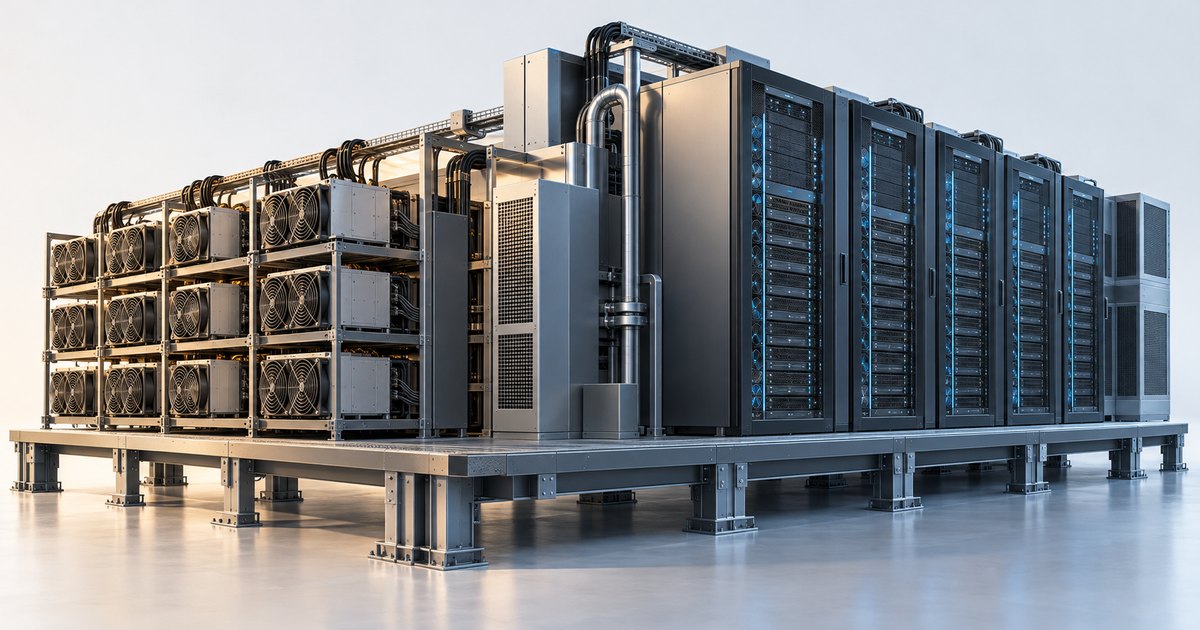
SWI Group raises $894 million to pivot former FTX miner Genesis Digital to AI
SWI Group said it raised 800 million euros ($894 million) from institutional investors to expand its data center and AI computing projects, as it moves former FTX-owned bitcoin miner Genesis Digital Assets toward AI workloads.
-

Broadcom CEO Hock Tan says many AI investors are behaving like gamblers
Broadcom CEO Hock Tan said many AI investors behave like gamblers and argued that access to capital, more than chip supply or power, may become the main constraint on AI infrastructure growth.
-

Anthropic reportedly signs multiyear cloud deal with IREN, a former bitcoin miner
Anthropic has reportedly entered a multiyear cloud-services agreement with IREN, a data-center operator formerly involved in bitcoin mining, according to The Information. Neither company has confirmed the deal.