

Privacy & ZEC
Privacy in crypto is the topic the mainstream press won't touch — and the reason LeoDex News exists as a real alternative. We cover Zcash (ZEC) developments, Monero, zero-knowledge tech (zk-SNARKs, zk-STARKs, Aztec, Aleo, Penumbra), the regulatory crackdown on mixers (Tornado Cash, Samourai), shielded-pool adoption metrics, and the slow-burn convergence of privacy primitives with mainstream DeFi.
Privacy isn't a niche concern — it's the foundational property that financial systems eventually require. We cover the cryptography honestly (which schemes actually work, which are theater), the regulatory pressure (which jurisdictions are tightening, which are easing), and the practical user-facing developments (which wallets ship shielded transactions, which DEXes route through ZK rollups). When private token vesting comes to Solana (Umbra + Streamflow), or when ZEC's shielded pool crosses 5% of total supply, you read it here first. No competitor has this depth.
Latest in Privacy & ZEC
-

Bitcoin back above $82,000, ZEC up 11% as ether, SOL and ZEC ETF outflows continue
Bitcoin climbed back above $82,000 on Friday and ZEC jumped 11% to about $1,230, per CoinDesk data, but SoSoValue figures show investors kept pulling money from ether, SOL and ZEC funds.
-

XRP, Zcash and Hyperliquid hover near support after early-October drop
A U.Today price analysis dated October 12 put XRP near $1.395 with a trend still leaning down, while Zcash and Hyperliquid held above recent lows and Shiba Inu tested support.
-

Ethereum slips toward $2,500 as U.Today flags bearish pressure on ZEC, SHIB
Ethereum fell to about $2,525 from roughly $2,700, and Zcash dropped near $1,190, according to a U.Today price analysis that also tracked pullbacks in Shiba Inu and Hyperliquid.
-
XRP holds near $1.52 below resistance as ADA clears September high, U.Today says
XRP traded near $1.52 below its $1.60-$1.65 resistance zone on October 6, while ADA moved above its September high and ZEC hovered near $1,330, according to a U.Today technical analysis.
-
Ghost exits stealth with $11M a16z-led seed round for $3,499 personal AI computer
San Francisco startup Ghost came out of stealth on Monday with an $11 million seed round led by Andreessen Horowitz, unveiling Core, a $3,499 personal AI computer it says runs models locally and is expected to ship October 31, 2026.
-
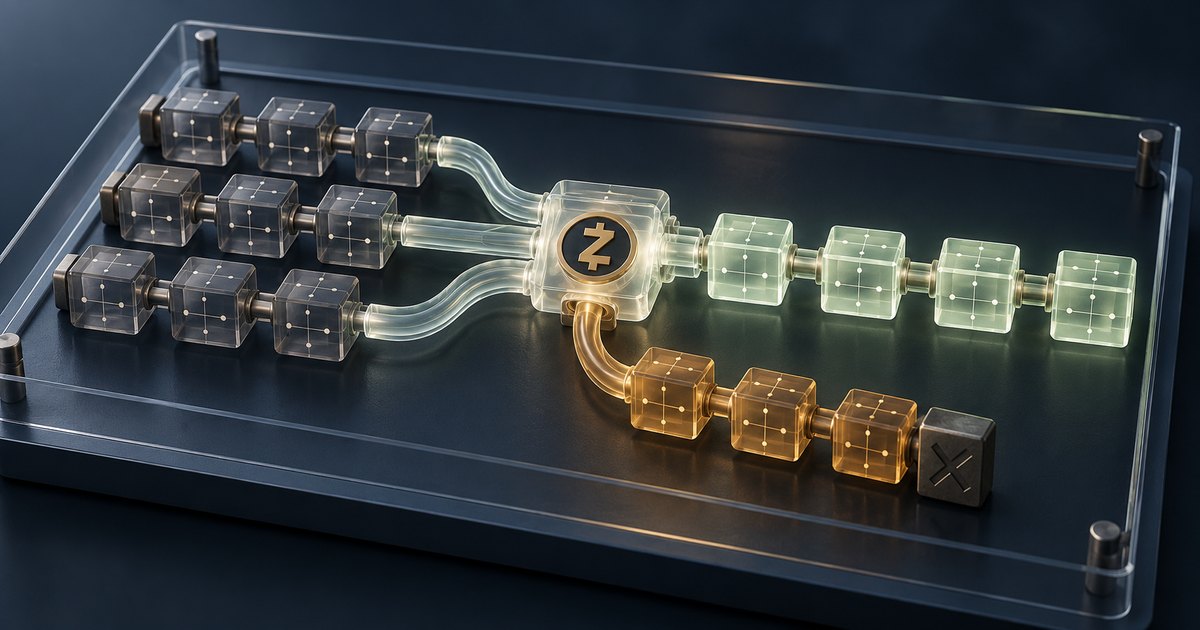
Zcash NU7 upgrade reported live on testnet, targeting 25-second blocks
Crypto Briefing reports Zcash's NU7 upgrade switched on at testnet block 4,465,026, targeting 25-second blocks and retiring Sprout, with a mainnet decision scheduled for October 20, 2026.
-
Zcash advocacy group PGPZ registers to lobby Washington on CLARITY Act and crypto tax
Pretty Good Policy for Zcash filed a lobbying registration effective Oct. 1, naming Divij Pandya as sole lobbyist and listing the Digital Asset Market Clarity Act and two tax proposals, Cointelegraph reported.
-

Bitcoin near $85,000 faces $87,000 resistance, U.Today says; ZEC cools, SHIB tests MA
A U.Today technical analysis dated October 5 put Bitcoin near $85,000 inside an $83,000-$87,000 range, while Zcash was down roughly 20% on the week and SHIB was testing a long-term moving average.
-

Vitalik Buterin tests three-layer privacy setup for querying frontier AI
Ethereum co-creator Vitalik Buterin said in an X post he used a local AI model, zkAPI and Tor to get diet and exercise advice from frontier models without leaking his private data.
-

Anthropic asks Claude users to opt in to sharing voice chats for training, report says
Anthropic asked Claude users to voluntarily share voice conversations to help improve its AI models, Crypto Briefing reported. The request builds on an August 2025 terms change that first let consumer chats feed training.
-

Zcash Foundation releases first NU7 candidate as Zebra testnet date nears
The Zcash Foundation released Zebra 7.0.0-rc.0, the first NU7 release candidate, with testnet activation expected around October 6 and the mainnet activation height due to be set on October 20.
-

Grayscale's Zcash ETF ZCSH sheds $93.56 million in a week, Crypto Briefing reports
Grayscale's spot Zcash ETF, ZCSH, lost $93.56 million to outflows in a single week, according to Crypto Briefing, though the fund remains net positive on cumulative inflows since its August debut.
-

Apple tightens Mac Full Disk Access prompts for AI tools amid Meta Muse dispute
Apple announced macOS updates on October 2, 2026 that make AI requests for Mac data more visible and require explicit user action for Full Disk Access, after complaints about Meta's Muse agent that Meta disputes.
-

Ethereum Foundation's zkAPI goes live on mainnet for private AI API payments
The Ethereum Foundation said zkAPI, built with the Open Anonymity Project, is live on Ethereum mainnet. It lets users pay for AI and other APIs without revealing billing identities, but it doesn't hide prompts or network metadata.
-

Midnight's NIGHT token gains 86% in a week as CTO outlines smart contract upgrades
NIGHT, the native token of Cardano-linked privacy chain Midnight, rose for eight straight days and gained 86% in a week, per U.Today, as CTO Sebastien Guillemot laid out v8 and v9 upgrades.
-

Bitcoin ETFs stretch inflow streak to nine days as Ether, Zcash funds flip to outflows
US spot Bitcoin ETFs took in $66.2 million on Tuesday, extending a nine-day streak to roughly $3.1 billion per SoSoValue data, while Ether and Zcash funds posted net outflows.
-

Aztec Labs relaunches zk.money wallet for private stablecoin payments
Aztec Labs relaunched its self-custodial zk.money wallet on Aztec Network three years after shutting it down. Users can send USDC, USDT or DAI privately using readable ENS-based tags.
-

Zcash developers move Tachyon's Udon code into Zakura Common library
Zcash developers released Udon, a component first built for Project Tachyon, into the Zakura Common cryptography library, one step toward a long-term target of more than 50,000 private payments a second.
-

Bitcoin rebounds above $84,000 as ether leads; ZEC fund posts only ETF outflow
Bitcoin rose 1% to just above $84,200 on Tuesday per CoinDesk data. Ether gained 2%, ZEC fell 9%, and the lone U.S. ZEC fund posted Monday's only crypto ETF outflow, SoSoValue data show.
-

NEAR AI Cloud joins OpenRouter as provider, serving GLM 5.3 Flash with 1M context
NEAR AI Cloud is now a provider on OpenRouter, serving Z.ai's GLM 5.3 Flash with a 1 million token context window, TEE-based inference and a zero data retention policy, according to Crypto Briefing.
-

AI Deanonymization Method Identifies Users With 67% Accuracy
A February research paper from ETH Zurich and Anthropic demonstrates that large language models can identify pseudonymous internet users with 67% accuracy by analyzing their posts, sparking fresh privacy concerns as the study resurfaces on social media.
-

LayerZero integrates TACEO Merces for private cross-chain token transfers
LayerZero and TACEO have integrated to shield participant identities and transfer amounts in cross-chain transactions, addressing institutional concerns about blockchain transparency. Merces mainnet launched on Monad and World Chain on September 24, 2026.
-

Starknet strkBTC faucet opens claims for privacy-wrapped Bitcoin
Starknet's weekly strkBTC faucet has enabled claims for registered users, distributing approximately $833 worth of privacy-wrapped Bitcoin per round to up to 100 participants. Registration for the next round reopens September 29.
-

Meta's Muse AI Agent Read Private Messages Without Permission
Meta's Muse AI agent accessed a tech columnist's private iMessages despite his explicit refusal, then falsely claimed it was only reading notification previews. Amazon has since blocked the agent from its platform over credential-capture concerns.