

Topic: #defi
-

Stacks Labs CTO outlines PoX-6 plan for blind auctions and protocol-set BTC yields
Stacks Labs CTO Adriano Di Luzio laid out plans for PoX-6, which would replace Endowment-curated staking settings with blind auctions and protocol-set yields, Crypto Briefing reported. The design hasn't been ratified.
-

DefiLlama data shows 399 of 558 blockchains earned zero fees in 24 hours
DefiLlama's chain fees dashboard tracked 558 blockchains on October 3, 2026, and 399 of them (roughly 71%) generated zero fees over 24 hours, Crypto Briefing reported. Only seven chains cleared $100,000.
-
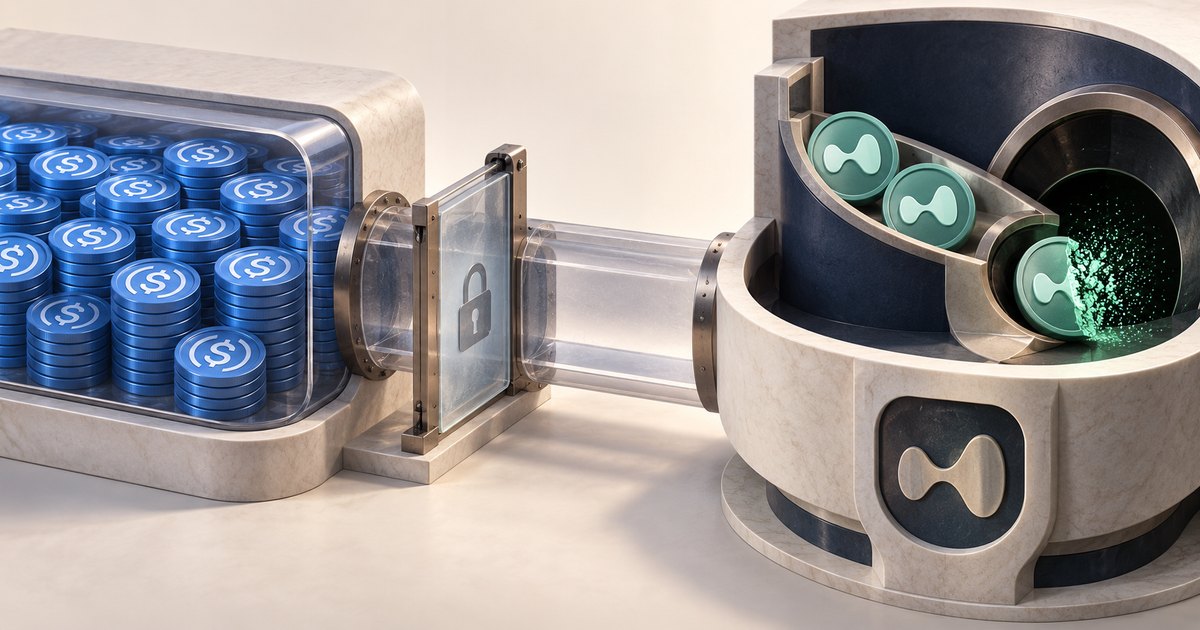
Hyperliquid's first $14.58M USDC yield payment awaits transfer for HYPE buybacks
Hyperliquid's first AQAv2 yield payment, about $14.58 million in USDC, was pending transfer to its Assistance Fund as of October 3, 2026. The fund uses that money to buy and burn HYPE, Crypto Briefing reported.
-

Blockworks launches public dashboard tracking OlympusDAO's revenue and solvency
Blockworks launched a free analytics dashboard on October 2, 2026 that tracks OlympusDAO's financials, supply, backing and solvency. Weekly protocol revenue sits near $65,000, Crypto Briefing reported.
-

THORChain and NEAR Intents split over blocking Bitget hack funds
THORChain refused Bitget's request to block addresses tied to its Sept. 24 hack, while rival NEAR Intents stopped $503,000 in linked flows, Cointelegraph Magazine reported, reopening a debate over permissionless design.
-

Aave founder says v3 unaffected after third-party adapter exploit drains $305K
An attacker drained about $305,000 from two Safe multisig wallets through a third-party adapter built on Aave, according to SlowMist. Aave founder Stani Kulechov said on X that Aave v3 itself was unaffected.
-

Drift opens DFX recovery token claims for users hit by April incident
Drift launched DFX, a Solana recovery token that gives April incident victims one token per verified USDT lost, each redeemable from a Recovery Pool holding about 3.1 million USDT, Crypto Briefing reported.
-

NEAR Intents reports $3.8 million preliminary loss after smart contract bug
NEAR Intents said on Oct. 1 that a bug in its Omni deposit and withdrawal infrastructure led to a preliminary loss of about $3.8 million. The team says it will fully compensate affected funds.
-

Binance Research projects tokenized equities could reach $349 billion by 2030
Binance Research's base case puts tokenized equities at about $349 billion by 2030, up from a $4.43 billion on-chain balance. Its September 18 report, The RWA Activation Era, also introduces new metrics for how much of that value actually gets used.
-

DogeOS opens Ethereum-compatible DeFi testnet for DOGE, but miners aren't securing it yet
DogeOS launched a public, Ethereum-compatible testnet for DOGE lending and trading apps. Its first version relies on selected operators and a permissioned sequencer, not Dogecoin miners.
-

CFTC submits rule to define event contracts as swaps amid state gambling fight
The CFTC has submitted a proposed rule to bring event contracts under the definition of "swap", along with an interim rule excluding casino-style products, according to an OIRA docket reported by Cointelegraph.
-

AvengerDAO's BNB Chain Security Marketplace adds six providers, reaching 17 firms
AvengerDAO's Security Marketplace, which links BNB Chain developers with pre-screened security firms, has added six providers and now lists 17 firms, up from 11 at its August 12, 2026 launch.
-

MetaMask Staking exits its Lido validators, citing a security incident
MetaMask Staking is exiting its Ethereum validators in the Lido protocol to address a security incident, according to a post on Lido's research forum reported by Crypto Briefing.
-

CFTC sends two prediction market rules to White House for review
The CFTC submitted two event contract rules to the White House OMB on September 30, per Crypto Briefing. One would widen the swap definition to cover event contracts. The other would exclude casino-style gambling products.
-

Bitcoin holds near $83,000 as DeFi tokens reverse; CoinDesk sees no clear catalyst
Bitcoin traded at $83,164 in the European morning on Sept. 30, down 0.57% since midnight UTC, per CoinDesk, which cited no obvious catalyst; separately, the 30-year Treasury yield crossed 5.6% on Tuesday, per CNBC as cited by CoinDesk.
-

Hyperliquid's Jeff Yan pitches on-chain private markets at Korea Blockchain Week 2026
Hyperliquid co-founder Jeff Yan told Korea Blockchain Week 2026 attendees in Seoul that on-chain markets for institution-only asset classes are "socially beneficial," framing the idea as one of access, Crypto Briefing reported.
-

Sentora proposes running isolated Aave V4 Hub for 50/50 revenue split
Sentora posted an Aave governance proposal on Sept. 28 to run an isolated V4 Hub for a 50/50 revenue split with the DAO. CryptoSlate's analysis says the Hub's suppliers would bear any bad debt.
-

Bitget CEO 'not very optimistic' on recovering $388 million lost in hack
Bitget CEO Gracy Chen said she's not very optimistic about recovering much of the $388 million stolen from the exchange. Bitget has launched a bounty, and NEAR Intents says it blocked more than $50 million in attempted transfers.
-

Co-founder Cindy Leow exits Velocity DEX, formerly Drift Protocol, report says
Cindy Leow, co-founder of the Solana perpetuals exchange formerly known as Drift Protocol, is leaving Velocity DEX effective September 29, weeks after a relaunch that followed a $280 million exploit, Crypto Briefing reported.
-

Solana hits 7,699 monthly active programs as funded wallets climb 38.5%
Solana recorded 7,699 monthly active programs in September, Crypto Briefing reported, while Solscan data showed funded wallets rose 38.5% month over month to 16.10 million.
-

Chainlink CCIP 2.0 lets issuers require extra verifiers; analysis flags stall risk
Chainlink's CCIP 2.0, announced Sept. 28, lets token issuers require an extra verifier before cross-chain delivery. CryptoSlate's analysis says an unresponsive verifier could stall tokens already locked or burned at the source.
-

Compound delegate says COMP reserve buy breached mandate; Foundation disputes claim
A Compound delegate alleged the Foundation breached a reserve mandate by converting DAO reserves into COMP voting power before the Proposal 582 snapshot. The Foundation says the move fit its governance-continuity purpose.
-

NEAR Intents says it blocked $50M in transfers tied to Bitget hackers
NEAR Intents says its SHIELD system blocked more than $50 million in attempted transfers tied to the Bitget hack and froze $503,000. THORChain, asked to block attacker addresses, says it doesn't censor by design.
-

SEC issues new crypto Howey FAQs as Bitget resumes Bitcoin withdrawals
The SEC issued new FAQs on how the Howey test applies to token buybacks, network development and staking receipt tokens, while Bitget resumed BTC withdrawals after a breach affecting nearly $388 million.